Coffee teeth stains: causes, remedies and treatments 2026
Coffee stains on teeth are extrinsic discolorations caused by the combined action of tannins and acidity, which attack the enamel and promote the adhesion of pigments. The result is progressive yellowing that compromises the appearance of the smile, but can be prevented and corrected with the right strategies. The coffee tannins bind to the protein film coating the teeth, while the acidity of the beverage temporarily demineralizes the enamel, making it more porous and receptive to pigments. Understanding this mechanism is the first step toward intervening effectively, both through daily habits and professional treatments.
Why does coffee stain teeth?
Coffee stains teeth for two distinct but related reasons: tannins and acidity. Tannins are polyphenolic compounds that easily bind to the proteins in the enamel, depositing dark pigments on the tooth surface. Acidity, on the other hand, temporarily softens the enamel, opening microscopic pores that trap pigments deep inside.

Dental stains are divided into two categories: extrinsic and intrinsic. Extrinsic stains form on the surface of the enamel and are the most common among coffee drinkers. Intrinsic stains, however, are found inside the tooth structure and require more targeted treatments. Distinguishing between the two types is essential for choosing the most effective treatment and not wasting resources on unsuitable methods.
One often underestimated aspect concerns the manner of consumption. Sipping coffee slowly for hours is more harmful than the total daily amount because it keeps the enamel in a prolonged state of demineralization. Drinking a cup in a few minutes, on the contrary, limits the contact time between acids and enamel.
Some basic habits help reduce the impact of coffee:
- Limit consumption to 2–3 cups per day
- Prefer black coffee without sugar, because sugar accelerates pigmentation
- Avoid adding sweeteners that increase the overall acidity of the beverage
- Do not sip coffee over several hours, but consume it in a short period
A tip: the consumption of up to 4 coffees a day without sugar shows no significant erosive effects on the enamel in most cases. Moderation and correct habits make a real difference.
How to prevent coffee stains with daily habits
Preventing coffee stains on teeth does not require giving up the beverage. It requires managing it consciously by adopting some simple but effective habits.
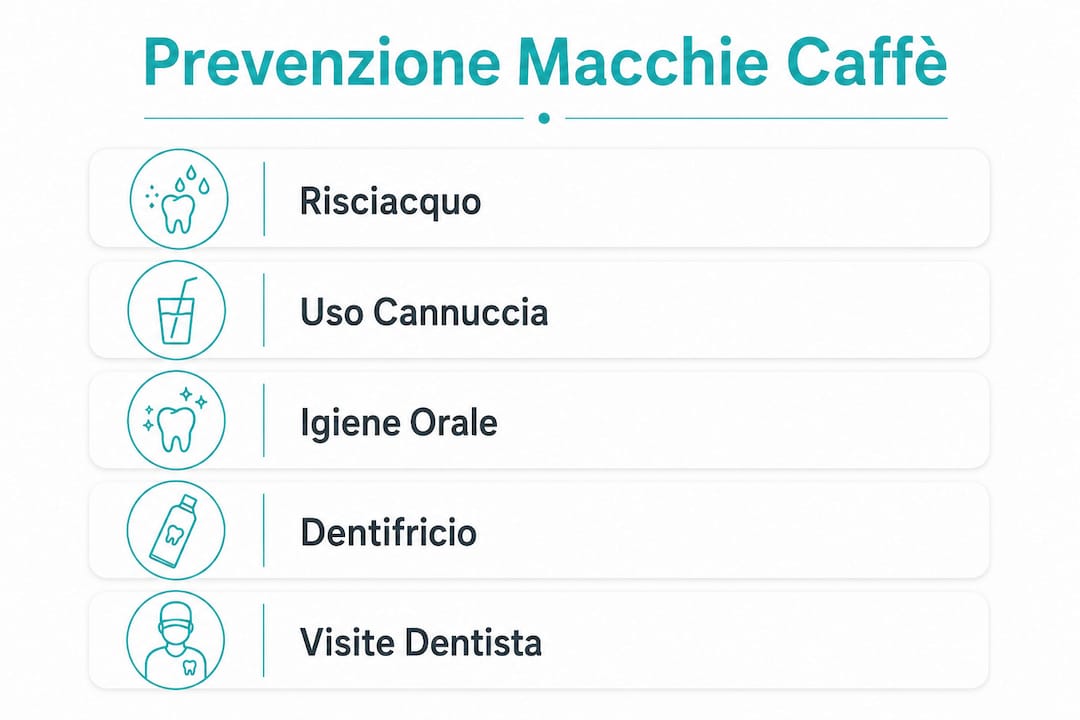
The first precaution concerns rinsing. After drinking coffee, rinsing your mouth with water immediately reduces the concentration of tannins and acids on the tooth surface. This simple gesture lowers the risk of pigmentation without requiring any additional effort.
The second point concerns brushing. Many believe that brushing your teeth immediately after coffee is the best choice. In reality, brushing your teeth immediately after consumption damages the enamel softened by acidity. The correct rule is to wait 20–30 minutes before using the toothbrush, allowing the enamel to remineralize.
Here is an effective daily routine for regular coffee drinkers:
- Drink your coffee in a few minutes, without sipping it slowly
- Rinse your mouth with water immediately after the last sip
- Wait at least 20–30 minutes before brushing your teeth
- Use a soft-bristle toothbrush to avoid abrading the enamel
- Complete the cleaning with dental floss to remove debris between the teeth
- Add an alcohol-free mouthwash to reduce the bacterial load and protect the gums
For cold beverages such as iced coffee, using a straw reduces the direct contact of the liquid with the front teeth. This small physical precaution significantly lowers the teeth's exposure to pigments.
Proper daily oral hygiene, including a toothbrush, dental floss, mouthwash, and regular dental visits, is the most effective combination for preventing the accumulation of pigments over time.
A tip: if you use a whitening toothpaste, choose one with gentle polishing agents certified for daily use. Toothpastes that are too abrasive, when used every day, wear down the enamel instead of protecting it.
Which professional treatments remove coffee stains?
When daily habits are not enough, professional treatments offer visible and lasting results. The choice of treatment depends on the depth of the stains and the overall condition of the enamel.
Scaling: the starting point
Scaling, commonly known as professional cleaning, is the first treatment to consider. It effectively removes surface stains, tartar, and pigment deposits accumulated over time. Patients often confuse surface stains with deep pigmentation: a professional cleaning is the first step to assess the problem and act in a targeted way. This avoids unnecessary and potentially harmful treatments.
Air-Flow Technology
The Air-Flow system is one of the most effective solutions for removing pigments from coffee, tea, and smoke. It uses a jet of water, air, and fine abrasive powder to remove surface stains without directly touching the enamel with mechanical instruments. The Air-Flow system also polishes the enamel surface, making it less porous and reducing the ability of pigments to adhere again. It is a technology particularly indicated for those with extensive stains or those difficult to reach with scaling alone.
Professional whitening
Professional whitening is indicated when the stains are deeper or when you want to improve the brightness beyond the natural color of the teeth. It is performed in the office with whitening agents at a controlled concentration, often activated by LED light or a laser. The duration of the effects depends on daily habits and the frequency of maintenance treatments.
A medical check-up before any whitening treatment is necessary to rule out cavities, gum problems, or damaged enamel that could be aggravated by whitening products.
| Treatment | Main indication | Depth of action |
|---|---|---|
| Scaling | Surface stains and tartar | Outer surface |
| Air-Flow | Coffee, tea, and smoke pigments | Surface and microfissures |
| Professional whitening | Deep discolorations or aesthetic improvement | Internal structure of the enamel |
Why aggressive DIY remedies worsen stains
Lemon, baking soda, and abrasive DIY products seem like quick solutions, but they produce the opposite effect in the medium term. Lemon and baking soda create micro-abrasions on the enamel surface and increase its porosity. More porous enamel absorbs pigments more quickly, making future stains harder to remove.
Experts advise against these methods for the long-term safety of the enamel. The damage is not always visible immediately, but it accumulates over time until it permanently compromises the tooth structure.
After professional or at-home whitening, following a white diet for at least 48 hours protects the results obtained. During this period, the enamel is rehydrating and is more sensitive to the absorption of pigments. Foods and beverages to avoid include:
- Coffee, tea, and colored beverages
- Red wine and dark fruit juices
- Sauces such as tomato, curry, and soy
- Foods with artificial colorings
A tip: to maintain whiteness over time, combine a complete oral hygiene routine with professional touch-ups every 6 months. This interval is sufficient to remove new accumulations before they become persistent stains.
To learn more about what other foods contribute to dental discolorations, consult the guide on foods that stain teeth by Esmile.
Key points
Coffee stains on teeth are prevented and removed by combining correct daily habits with targeted professional treatments, without giving up coffee.
| Point | Details |
|---|---|
| Main cause | Coffee tannins and acidity open the enamel pores and fix the pigments. |
| Most effective habit | Rinsing your mouth with water immediately after coffee reduces the adhesion of pigments. |
| Most common mistake | Brushing your teeth immediately after coffee damages the enamel softened by acidity. |
| Professional treatment | Air-Flow and professional whitening safely remove surface and deep stains. |
| Post-treatment | The white diet for 48 hours after whitening protects the results and stabilizes the enamel. |
Coffee and teeth: what I have learned working every day with those who want a whiter smile
Working every day with people who want to improve their smile, I have noticed a recurring pattern: almost everyone knows that coffee stains teeth, but very few know why and even fewer know how to truly manage it. Most arrive convinced they have to choose between coffee and a bright smile. That is not the case.
What makes the difference is not stopping drinking coffee. It is changing the way you drink it and how you take care of your teeth afterward. A simple rinse with water, consuming the cup in a few minutes instead of keeping it on the table for an hour, waiting before brushing: these habits, taken together, change the result in a surprising way.
The other mistake I often see is relying on aggressive DIY remedies in the hope of saving time. Baking soda and lemon seem logical because they "degrease" and "whiten," but enamel is not a kitchen surface. Once abraded, it does not regenerate. Those who use these methods for months end up with more sensitive, more porous teeth and, paradoxically, more prone to stains.
My advice is simple: start with daily habits, then consider a professional treatment if stains are already present. A drastic approach is not needed. A consistent approach is needed.
— Esmile
Esmile for a whiter smile, even if you drink coffee every day
Those who drink coffee regularly need solutions designed to counteract stains over time, not just remove them once. Esmile was born precisely for this: to offer effective, safe, and CPNP-certified whitening treatments, conveniently usable at home.

The professional whitening kit by Esmile is designed to remove surface stains and improve the natural tone of the teeth with visible results from the first uses. For those who prefer an in-office treatment, professional whitening with Dr. Marilena Troise offers a personalized assessment and a deeper action on persistent discolorations. Over 300 people a day choose Esmile: the best-selling dental whitening brand on Amazon Italy.
Frequently asked questions
Does coffee stain teeth permanently?
Coffee stains are in most cases extrinsic, meaning they are superficial. With a professional cleaning or an appropriate whitening treatment, they are effectively removed.
How long after coffee can you brush your teeth?
You must wait at least 20–30 minutes before brushing your teeth. The acidity of coffee temporarily softens the enamel, and immediate brushing damages it.
Does whitening toothpaste remove coffee stains?
A whitening toothpaste with gentle polishing agents helps reduce surface stains over time, but it does not replace a professional cleaning for already established pigmentation.
Does tea also stain teeth like coffee?
Yes. Tea, especially black tea, contains tannins in similar quantities to coffee. To remove tea stains on teeth, the same strategies apply: immediate rinsing, proper hygiene, and professional treatments if necessary.
Do at-home whitening kits work on coffee stains?
Certified at-home whitening kits, such as those from Esmile, are effective on extrinsic coffee stains. For deep or very extensive stains, it is preferable to start with a professional assessment.