48–72 hours of the white diet after whitening, what to eat
Yes: following a white diet for a temporary period after whitening helps preserve the results. During this window, the enamel is temporarily more porous, as confirmed by clinical studies on post-whitening sensitivity and permeability, so it absorbs pigments more easily. Esmile, with its CPNP-certified kits, recommends following this dietary break so as not to undermine the treatment you have just had.
In short:
- The white diet helps preserve the whitening results, reducing the risk of stains and prolonged sensitivity.
- It is essential to avoid chromogenic foods and beverages such as coffee, red wine, berries, tomatoes, and dark chocolate during the first 48-72 hours.
- The use of LED technologies in at-home kits helps maintain whiteness longer, especially with superficial stains from coffee, tea, or smoking.
- It is advisable to prefer light and low-pigmented foods, such as white fish, light cheeses, and washed fruit, during the maintenance phase.
- For sensitivity or deeper stains, it is best to consult a professional and not rely on abrasive or uncontrolled DIY remedies.
Table of Contents
- What to eat during the white diet for teeth whitening
- What to avoid after teeth whitening
- How long the white diet lasts and when to ease it
- How to take care of your teeth immediately after treatment
- Managing beverages and daily habits without too many sacrifices
- DIY remedies to avoid after whitening
- Our perspective on how to apply this advice
- Maintaining whiteness at home with Esmile kits
- Sources
What to eat during the white diet for teeth whitening
In the first hours after treatment, the choice of foods matters as much as the discipline to follow it. The white diet recommends light and low-pigmented foods, because they contain few natural dyes and leave no residue on the still-sensitive enamel.
The foods to prioritize are:
- Plain rice and pasta, seasoned with olive oil
- Boiled or steamed potatoes
- Light cheeses such as mozzarella, ricotta, or primo sale
- Chicken and turkey cooked without dark sauces
- White fish (cod, plaice, sole)
- Natural yogurt and milk
- Hard-boiled eggs or simple omelets
- Peeled bananas and apples
- Cauliflower and fennel, raw or cooked
A typical lunch can be plain pasta with light parmesan, followed by steamed chicken breast and fennel. For breakfast, natural yogurt with banana works well, while for dinner, steamed white fish with potatoes remains the safest choice. These foods also have a useful mechanical effect: chewing foods like apple and fennel stimulates salivation and helps clean the surface of the teeth between meals.
What to avoid after teeth whitening
The natural dyes present in many foods and beverages bind to the enamel made more permeable by the treatment. Clinical guides recommend avoiding chromogenic foods during the first 48-72 hours, because tannins and anthocyanins penetrate more easily during this phase.
To avoid in the following hours and days:
- Coffee and tea, even decaffeinated
- Red wine and dark fruit juices
- Berries (blueberries, blackberries, redcurrants)
- Tomatoes, sauces, and tomato-based products
- Curry, turmeric, and dark spices
- Dark chocolate and dark sauces such as soy or balsamic
- Colored carbonated drinks, due to the combined effect of dyes and acidity
- Cigarettes, whose tar stains deeply
The mechanism varies from case to case: the tannins from tea and wine deposit on the surface, the anthocyanins from berries penetrate the micropores, while the acidity of carbonated drinks and tomatoes erodes the enamel, making it even more receptive to stains. A widely used practical rule is the white fabric test: if a food would stain a white cotton napkin, it is best to avoid it for a few days. For a broader list, our guide on the foods that stain teeth the most goes into detail about each category.
How long the white diet lasts and when to ease it
The standard duration is a few dozen hours for in-office whitening and can be extended for at-home or combined treatments, due to the prolonged contact of the gel with the enamel. Dental guidelines confirm this difference between protocols based on the type of application received.
After this period, reintroduce colored foods one at a time, not all at once: try a coffee first, then a glass of wine the next day, observing the teeth's reaction. If sensitivity persists beyond a week or you notice localized rather than uniform stains, it is time to contact the dentist. To better understand the full timeline, the guide on how long whitening lasts and how to maintain it offers a broader picture.

How to take care of your teeth immediately after treatment
Post-whitening oral hygiene requires a few extra precautions compared to your usual routine. After eating or drinking something acidic or pigmented, wait 20-30 minutes before brushing your teeth: brushing immediately makes the acids even more aggressive on the softened enamel.
Some simple rules to follow during the first few days:
- Use a soft-bristle toothbrush, with gentle movements
- Choose desensitizing toothpastes with potassium nitrate or fluorides
- Prefer colorless mouthwashes or simply rinsing with water.
- Avoid colored mouthwashes unless strictly necessary
A tip: if you feel discomfort from cold or heat during the first few days, a specific desensitizing toothpaste applied directly to the sensitive teeth, left to work for a few minutes before rinsing, helps more than simple brushing. Studies on post-whitening sensitivity confirm that these products reduce discomfort in most cases, with the effect subsiding within 24-48 hours. Those who already have sensitivity issues can find out more in the guide dedicated to whitening for sensitive teeth.
Managing beverages and daily habits without too many sacrifices
There is no need to eliminate everything for days: small, targeted precautions are enough. Drinking a sip of water after a pigmented food or beverage reduces the prolonged contact of the dye with the enamel, while using a straw for high-risk beverages limits the direct impact on the front teeth without forcing you to give up coffee entirely.
Other useful daily precautions:
- Choose a light latte instead of pure espresso, when possible
- Reduce sugar in beverages, which promotes the adhesion of pigments
- Limit or stop smoking during the first few days
- Prefer room-temperature beverages during the first 24 hours, because teeth are more sensitive to temperature fluctuations
These daily habits, maintained even after the critical window, make the difference between a smile that stays white for months and one that darkens in a few weeks.
DIY remedies to avoid after whitening
Activated charcoal is often circulated online as a natural whitening remedy, but it can erode the enamel and make teeth duller over time precisely because of its abrasive action. The immediate effect seems positive because it removes superficial plaque, but the damage to the enamel surface worsens the situation in the medium term.
The same applies to highly abrasive toothpastes or uncontrolled whitening products used in the 72 hours following treatment: they risk irritating already sensitive gums and altering the newly treated surface. If after a week the enamel shows irregular stains or the sensitivity does not go away, it is better to talk to a dentist instead of trying another DIY remedy found online.

Our perspective on how to apply this advice
At Esmile, we work every day with people who have just finished a whitening cycle and want to know only one thing: how not to waste the results. The white diet is not an influencer whim, it is the phase where it is decided whether the investment made lasts weeks or months.
This is why our kits are CPNP-certified and also designed for those who have sensitive teeth: product safety matters as much as dietary discipline during the first few days. That said, if the sensitivity does not go away or you see strange stains, the advice always remains the same: talk to a dentist, do not rely solely on an online article.
— Esmile
Maintaining whiteness at home with Esmile kits
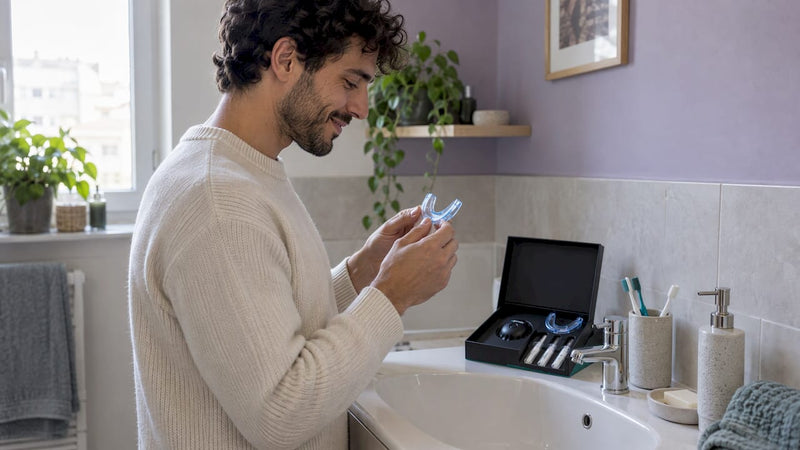
Once the critical 48-72 hour window has passed, the challenge becomes maintaining the results over time without returning to the dentist every few months. This is where a well-made at-home kit changes the game compared to only chasing the white diet: the Esmile whitening kit with LED technology is designed for quick touch-ups at home, suitable even for those who have sensitive teeth, with CPNP-certified formulas that guarantee verified safety standards.

An at-home kit makes sense when the stains are superficial and due to coffee, tea, wine, or smoking accumulated over time: in these cases, maintaining whiteness at home costs much less than an in-office session and easily integrates into the evening routine. For deep stains, internal discolorations, or complex cases, a professional path like the one proposed with Dr. Marilena Troise remains preferable. Those who want to prolong the effect without repeating the entire cycle can instead look at the maintenance pens and refill gels, to be used once or twice a month, combining them with the white diet whenever a touch-up is needed. The first step is simple: choose the kit suitable for your sensitivity and integrate it into the oral hygiene routine you already have.
This article provides general information and does not replace the opinion of a qualified medical professional. Consult a qualified healthcare professional regarding your specific case before acting based on this content.
Sources
- PMC article — details on post-whitening sensitivity and characteristics
- White Diet: The Secrets to Keeping Teeth Perfectly White After Whitening - farmaciaresanait
- What to eat after teeth whitening — Amico Dentista