

Yellow teeth: causes, treatments and effective remedies
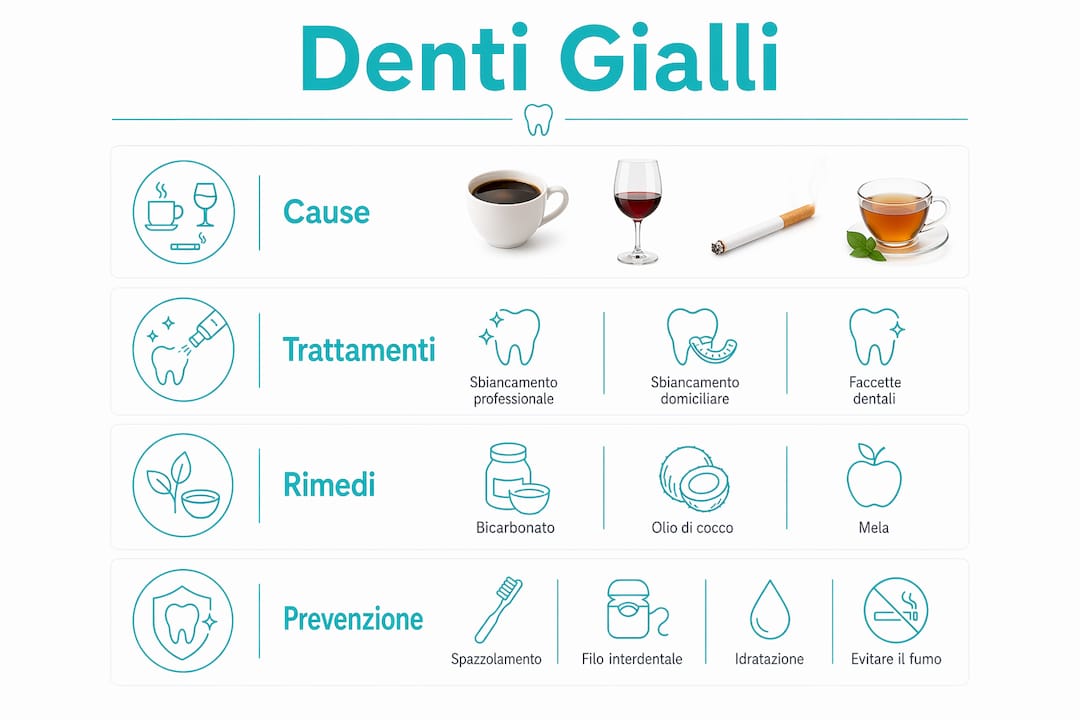
Yellow teeth are the result of the yellowing of the enamel and dentin caused by external pigments or by changes in the internal structure of the tooth. The most common causes include the regular consumption of coffee, tea, red wine, and smoking, which deposit pigments on the outer surface of the enamel. Over time, natural aging also thins the enamel and makes the underlying dentin, which has a naturally darker shade, more visible. Understanding where the yellowing comes from is the first step to choosing the right treatment and achieving concrete results.
Why do teeth turn yellow?
Tooth yellowing is divided into two categories: extrinsic and intrinsic. Extrinsic yellowing affects the outer surface of the tooth and depends on dietary habits, smoking, and poor oral hygiene. Intrinsic yellowing, on the other hand, involves the dentin and can be caused by medications such as tetracyclines, dental trauma, or genetic factors.
Coffee, tea, and red wine contain tannins and chromogens, molecules that bind to the enamel and discolor it over time. Smoking adds nicotine and tar, which penetrate the micropores of the enamel and create stains that are difficult to remove with brushing alone. Some foods such as blackberries, turmeric, and tomato sauce also leave visible traces over the long term.

Yellowing can also signal oral health problems such as gingivitis or plaque buildup. If you notice bleeding gums along with the change in color, it is useful to consult a specialist before starting any whitening treatment.
What are the professional treatments for whitening yellow teeth?
Professional dental whitening, also known as tooth whitening, is the most effective method to reduce yellowing safely and durably. Modern treatments use hydrogen peroxide-based gel at 40% or carbamide peroxide at 16%, activated by LED light or laser to accelerate the chemical reaction and reduce chair time.
The typical steps of a professional session are as follows:
- Preliminary cleaning: the dentist performs tartar ablation to ensure that the gel acts evenly on the entire dental surface.
- Gum protection: a resin barrier is applied to the gums to prevent irritation during the treatment.
- Gel application: the whitening gel is spread on the teeth and left to work for cycles of 15–20 minutes.
- Activation with LED light or laser: the light accelerates the decomposition of the peroxide, which releases oxygen and breaks the color molecules in the enamel.
- Rinsing and evaluation: at the end, the gel is removed and the result obtained is checked.
A session lasts on average 45–60 minutes and can be followed by a personalized home protocol to consolidate the result. This combined approach is what guarantees the most uniform and durable results.
Professional treatments do not damage the enamel if performed correctly with controlled products and adequate gum protection. The most common side effects, such as mild temporary sensitivity, resolve in a few days.
Professional whitening lasts on average 12–24 months depending on dietary habits and lifestyle. Those who consume coffee or tea daily tend to see the results diminish sooner than those who limit these foods.
A tip: before any whitening session, ask your dentist to perform a professional cleaning. The gel works better on a surface free of tartar and plaque, and the final result will be more uniform.
How does home whitening work?
Home whitening is a valid alternative to the in-office treatment, provided you use products with adequate concentrations and follow the correct instructions. Home protocols use carbamide peroxide gels at concentrations between 10% and 20%, applied via custom trays for 4–10 hours a day, at night or during the day.
The process consists of these steps:
- Custom tray: the dentist or the professional kit provides a tray that fits perfectly on the teeth, ensuring uniform contact with the gel.
- Gel application: a small amount of gel is placed in the tray and worn for the indicated time.
- Gradual results: results are noticeable after 7–14 days of continuous use. The color gradually lightens.
- Monitoring: the color of the teeth is compared with a reference color scale to assess progress.
- Maintenance: after the initial cycle, the gel is used once or twice a week to prolong the result.
Consistency in treatment matters more than product concentration. Irregular applications produce uneven and less durable results. For those looking for a comparison of costs and results between the two approaches, the guide on professional or at-home whitening offers a detailed analysis.
The main advantage of home whitening is flexibility: it can be done on your own time, without appointments. The limitation is that lower concentrations require more time to produce visible results compared to an in-office session.
Do natural remedies for yellow teeth really work?
The most common natural remedies, such as lemon and baking soda, do not whiten teeth effectively and cause concrete damage to the enamel. The citric acid in lemon corrodes the enamel, while baking soda is an abrasive that scratches the tooth surface. Both mechanisms produce micro-lesions that make teeth more porous and therefore more prone to stains over time.
The main risks of DIY remedies include:
- Enamel erosion: citric acid lowers the pH of the mouth and gradually dissolves the tooth's outer protective layer.
- Increased sensitivity: thinned enamel exposes the dentin to temperature changes, causing pain with hot or cold foods.
- Accelerated future yellowing: micro-abrasions from DIY products make teeth more receptive to stains, worsening the problem in the long term.
- Alteration of the oral flora: lemon and baking soda damage the oral microbiology, reducing the mouth's natural ability to protect itself from bacteria.
- No effect on the dentin: home remedies only act on the surface and do not penetrate the enamel to remove deeper stains.
A tip: if you want to use something natural for oral care, opt for fluoride mouthwash or dental floss. These tools protect the enamel without damaging it, unlike lemon and baking soda.
The difference between a home remedy and a professional product is not only effectiveness: it is safety. Certified products, such as those compliant with the CPNP regulation, are tested to ensure they do not damage the enamel or gums.
How to prevent tooth yellowing over time
Prevention is the most effective method to keep teeth white after a treatment and to slow down natural yellowing. Daily habits have a direct impact on the color of teeth in the long term.
The most useful practices are:
- Brush your teeth after coffee, tea, or wine: doing so immediately after consumption reduces the contact time between pigments and enamel, prolonging the whitening result.
- Use dental floss every day: it removes residues between the teeth where the toothbrush does not reach, preventing the buildup of pigmented plaque.
- Limit smoking: nicotine and tar are among the main causes of stubborn stains that no toothpaste can completely remove.
- Drink water after colored beverages: rinsing the mouth with water after coffee or tea reduces the concentration of chromogens on the enamel.
- Get a professional cleaning regularly: a dental cleaning every 6–12 months removes tartar and surface stains that accumulate despite good daily hygiene.
| Habit | Recommended frequency |
|---|---|
| Brushing teeth | 2 times a day, after main meals |
| Use of dental floss | 1 time a day, preferably in the evening |
| Rinsing with water after pigmented beverages | Every time you consume coffee, tea, or wine |
| Professional cleaning by the dentist | Every 6–12 months |
| Whitening maintenance cycle | Every 3–6 months, depending on the initial treatment |
Knowing which foods stain teeth helps make more conscious choices without completely giving up your habits. It is not about eliminating coffee from your life, but managing it intelligently.
Key points
Professional dental whitening is the safest and most effective method to reduce yellowing, with results that last 12–24 months and no damage to the enamel if performed correctly.
| Point | Details |
|---|---|
| Causes of yellowing | Coffee, tea, smoking, and aging are the main causes; distinguishing extrinsic from intrinsic guides the treatment choice. |
| Professional treatment | Uses 40% hydrogen peroxide or 16% carbamide peroxide with LED light; lasts 45–60 minutes and results persist for 12–24 months. |
| Home whitening | 10–20% carbamide peroxide gel applied 4–10 hours a day; consistency matters more than concentration. |
| Natural remedies: caution | Lemon and baking soda irreversibly damage the enamel and worsen yellowing in the long term. |
| Daily prevention | Brushing teeth after pigmented beverages and getting a professional cleaning every 6–12 months maintains the result over time. |
A smile is not just aesthetics: my vision after years in the sector
After years of working with those seeking a brighter smile, I have learned one thing that many articles do not say: whitening does not change the natural color of the tooth. It makes it brighter, restoring it to its original potential. The result depends on the genetic structure of the tooth and how much enamel remains intact. Those who expect "snow-white" teeth risk being disappointed, not because the treatment does not work, but because they have wrong expectations.
The psychological impact of a brighter smile is real. Many people report feeling more confident in conversations and social contexts after a whitening cycle. It is not vanity: it is self-esteem, and it deserves as much attention as physical health.
The advice I always give is this: rely on certified products and controlled protocols. Avoid DIY shortcuts. Enamel does not regenerate, and damage caused by home remedies may require expensive dental interventions to be corrected. The shortest path is not always the most convenient.
— Esmile
Esmile: professional whitening at your home
Those who suffer from coffee, tea, or smoking stains know how difficult it is to find a product that really works without requiring a visit to the dentist every time.

Esmile was born precisely to meet this need. The professional whitening kit is CPNP certified and designed to provide visible results from the first applications, directly at home. Over 300 people a day choose Esmile, which is the best-selling dental whitening brand on Amazon Italy. The products are safe, easy to use, and designed for those who want a whiter smile without giving up convenience. If sensitivity is a concern, the Esmile desensitizing gels complete the treatment by protecting the teeth during and after whitening.
Frequently asked questions
How long do dental whitening results last?
Professional whitening lasts on average 12–24 months, depending on dietary habits and lifestyle. Those who consume coffee or smoke regularly will see the results diminish sooner.
Do lemon and baking soda really whiten teeth?
No. Lemon and baking soda irreversibly damage the enamel, increase sensitivity, and make teeth more prone to stains over time.
Does professional whitening ruin teeth?
No, if performed correctly. Treatments with controlled-concentration gel and gum protection do not alter the structure of the tooth, and side effects, such as temporary sensitivity, resolve in a few days.
Can I whiten teeth at home without going to the dentist?
Yes, with certified products that use 10–20% carbamide peroxide gel. Consistency in applications is crucial to achieving a visible and uniform result.
When should I worry about the color of my teeth?
If yellowing is accompanied by bleeding gums or pain, consult a dentist before starting any treatment. These symptoms may indicate oral conditions that require specific medical attention.


