

Smoker’s teeth: causes, risks, and how to whiten them
Smokers' teeth become stained because nicotine and tar penetrate deep into the enamel, creating discolorations that cannot be removed with regular oral hygiene. Smoking stains are divided into extrinsic, deposited on the surface, and intrinsic, absorbed by the dentinal tubules beneath the enamel. Removing them requires a targeted approach: professional cleaning removes the surface layer, but deep stains can only be treated with high-concentration peroxide whitening. Understanding this distinction is the first step toward choosing the right treatment and achieving long-lasting results.
How do smokers' teeth become stained?
Smokers' teeth are stained by two specific substances: tar and nicotine. Tar is a dark resin that deposits on the enamel and binds to its microscopic irregularities. Nicotine, on the other hand, is naturally colorless but oxidizes upon contact with oxygen, turning yellow or brownish.
Enamel is not a smooth, impermeable surface. It contains micropores and dentinal tubules that absorb pigmenting substances like a sponge. In smokers, this process repeats thousands of times over the years, layering stains at increasingly deeper levels.
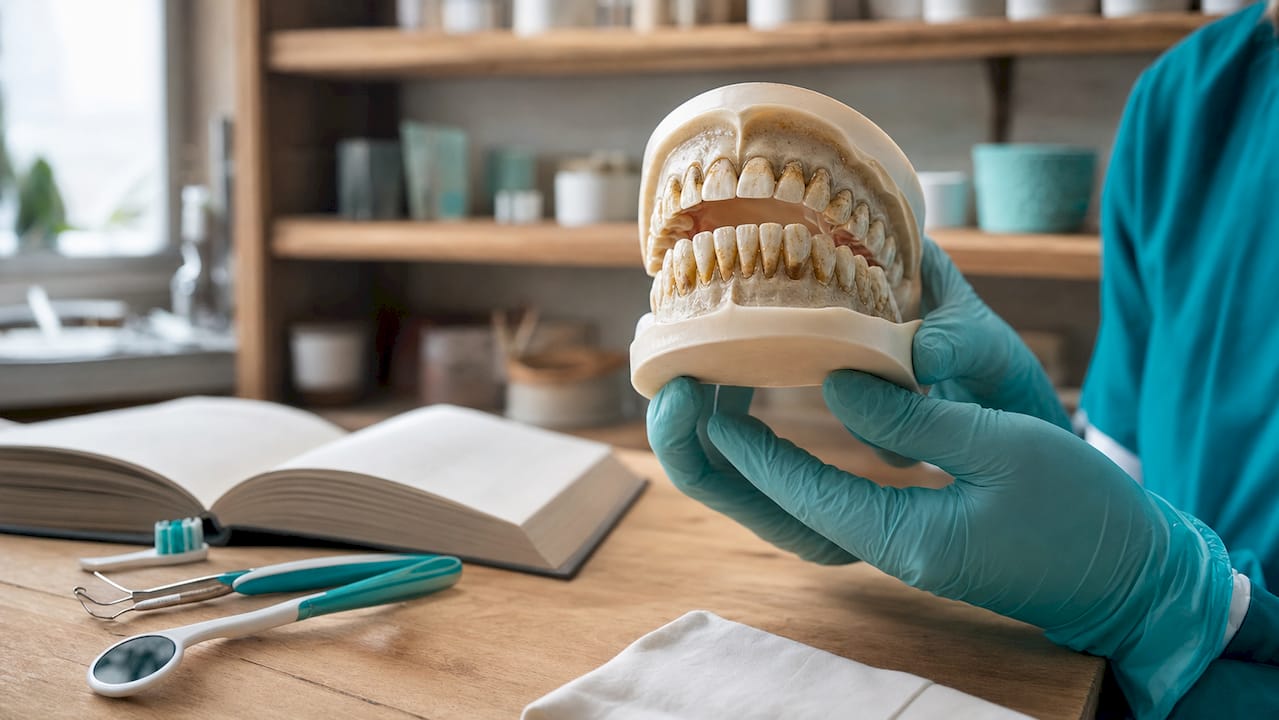
Extrinsic stains are found on the surface and respond to professional cleaning. Intrinsic stains, however, are located inside the dentin and require chemical whitening agents to be decolorized. This is why common whitening toothpastes are not enough: they only work on the surface.
Factors that worsen the situation include:
- Smoking frequency: more cigarettes per day mean more tar deposits per unit of time.
- Already porous enamel: those who consume coffee, tea, or red wine accumulate stains from multiple sources simultaneously. The most pigmenting foods accentuate the effects of smoking.
- Inadequate oral hygiene: bacterial plaque traps coloring substances and makes it easier for them to penetrate.
- Reduced saliva: smoking reduces saliva production, depriving the teeth of their natural self-cleaning mechanism.
What risks does smoking pose beyond dental stains?
Stains are the visible sign, but the real damage is deeper. Smokers have a 50% to 85% higher risk of developing periodontitis compared to non-smokers. Periodontitis is a disease that destroys the supporting tissue of the teeth, leading to their loss over time.
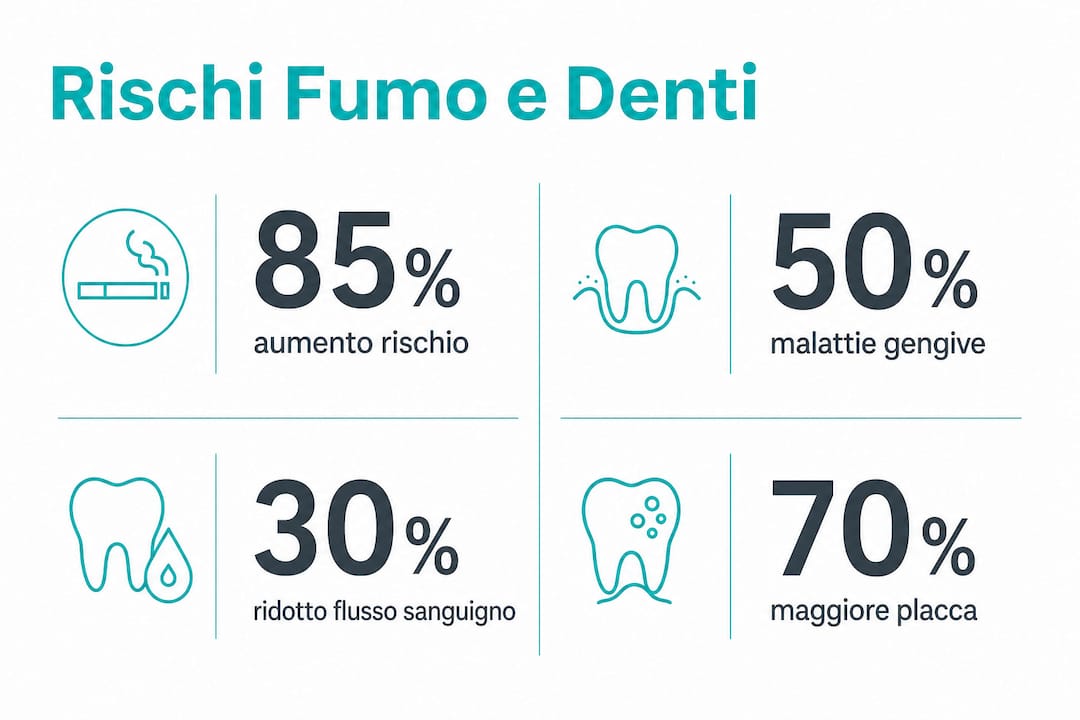
The mechanism is insidious. Nicotine causes gingival vasoconstriction, reducing blood flow to the gums. This suppresses bleeding, which is the first warning sign of gingivitis. A smoker's gums often appear healthy, even when the disease is already underway.
Smoking also alters the oral microbiome, promoting pathogenic bacteria that attack the gums and bone quickly and silently. Meanwhile, the oral environment of smokers becomes more acidic, with a higher temperature and reduced saliva: ideal conditions for the progression of periodontal disease.
The documented clinical consequences are:
- Deeper periodontal pockets and greater bone destruction compared to non-smokers.
- Delayed healing after extractions, implants, or oral surgery.
- Over 3.24 times higher risk of tooth loss, even in smokers who follow a regular periodontal maintenance program.
- Significantly elevated risk of oral cancer, which is halved within 5–10 years of quitting smoking.
Smoking even a few cigarettes a day is not without risks: there is no safe threshold for periodontal damage. Even reduced consumption classifies the disease as high-risk according to the 2018 AAP/EFP criteria.
What professional treatments are available for whitening smokers' teeth?
Whitening teeth yellowed by smoking follows a two-phase protocol. The first is deep cleaning, the second is the actual whitening treatment.
Phase 1: Air-Flow cleaning
Professional Air-Flow cleaning uses an extremely fine erythritol powder projected at high pressure onto the tooth surface. This method removes extrinsic stains without scratching the enamel and prepares the teeth to receive the whitening gel evenly. Skipping this phase means applying the gel over a layer of deposits that reduces its effectiveness.
Phase 2: Whitening with peroxides and LED light
Intrinsic stains require high-concentration peroxides activated by an LED lamp. The light accelerates the chemical reaction of the peroxide, which penetrates the dentinal tubules and decolorizes nicotine and tar pigments. This treatment is performed in the office and produces visible results from the first session.
Combined protocol: office treatment followed by a home cycle
The most effective protocols for smokers involve an intensive office session followed by a 10–15-day home cycle with customized trays. The home cycle consolidates the result and reaches the deeper stains that the single session did not completely discolor.
- First visit: periodontal assessment and Air-Flow cleaning with erythritol.
- Whitening session: application of high-concentration peroxide gel with LED activation.
- Home cycle: daily use of trays with lower-concentration gel for 10–15 days.
- Remineralization: application of a calcium and amorphous phosphate-based gel to seal the enamel and reduce sensitivity.
- Periodic check-up: maintenance visit every 6 months for active smokers.
One piece of advice: always ask your dentist for a periodontal assessment before starting any whitening treatment. Whitening teeth with diseased gums can worsen inflammation.
How to maintain results after whitening?
The period immediately following whitening is the most delicate. The enamel remains porous for 48–72 hours after treatment. During this window, smoking or consuming pigmenting foods can completely negate the results achieved.
Post-treatment remineralization is not optional. Calcium and amorphous phosphate-based gels seal the micropores of the enamel and reduce sensitivity. Applying them immediately after whitening accelerates the closure of the channels that absorb stains.
One piece of advice: during the first 48 hours after whitening, follow the so-called “white diet”: rice, chicken, yogurt, water. Avoid coffee, tea, red wine, and, above all, cigarettes.
To maintain a whitened smile over time, these habits make a difference:
- Electric toothbrush: removes plaque more effectively than a manual one, reducing the deposits that trap stains.
- Dental floss and interdental brushes: remove debris between the teeth where stains accumulate most easily.
- Alcohol-free mouthwash: alcohol dries out the mucosa and reduces saliva, worsening the smoker's oral environment.
- Home maintenance cycles: repeating a short whitening cycle every 2–3 months significantly prolongs the results.
- Check-ups every 6 months: active smokers need more frequent professional cleanings than average.
The effectiveness of at-home whitening depends on the gel concentration and consistency of use. A quality product used irregularly produces inferior results compared to a standard one used with discipline.
Why DIY remedies are not enough for smoking stains?
The most common home remedies, such as baking soda, activated charcoal, and supermarket whitening toothpastes, only work on the surface. Intrinsic smoking stains, those that make teeth uniformly and persistently yellow, are located inside the dentin and cannot be reached with mechanical abrasives.
Overly abrasive whitening toothpastes can scratch the enamel, creating microlesions that facilitate the future adhesion of nicotine and tar. The result is paradoxical: using them regularly worsens the problem in the long term.
The concrete limitations of over-the-counter products are:
- No action on intrinsic stains: without peroxides, there is no chemical decolorization of the dentin.
- Uncontrolled abrasiveness: commercial toothpastes do not always declare the Relative Dentin Abrasivity (RDA) index. Values above 150 RDA damage the enamel with daily use.
- Too-low peroxide concentrations: over-the-counter products sold in Italy have regulatory limits on hydrogen peroxide concentration that are insufficient for deep smoking stains.
- No personalization: the gel concentration and application times vary depending on the thickness of the enamel and the severity of the stains. A generic product does not take these variables into account.
For a safe and effective at-home whitening, choosing the right product makes all the difference. Professional at-home kits, certified and formulated with appropriate concentrations, offer results that DIY remedies cannot guarantee.
Key points
Caring for smokers' teeth requires a two-phase protocol: professional cleaning for surface stains and peroxide whitening for deep stains, followed by consistent home maintenance.
| Point | Details |
|---|---|
| Extrinsic vs. intrinsic stains | Surface stains are removed with Air-Flow; deep stains require peroxides and LED light. |
| High periodontal risk | Smokers have up to an 85% higher risk of periodontitis and must have check-ups every 6 months. |
| Critical post-whitening window | Within 48–72 hours after treatment, smoking or drinking coffee negates the results achieved. |
| Insufficient DIY remedies | Abrasive toothpastes do not reach intrinsic stains and can damage the enamel over time. |
| Home maintenance | Whitening cycles every 2–3 months and an electric toothbrush measurably prolong the results. |
Smoking changes teeth more than it seems: my experience with Esmile
Working every day with people seeking solutions for stained teeth, I have learned one thing that many articles do not clearly state: the problem of smokers' teeth is not just aesthetic. It is a sign that oral health is under pressure from multiple fronts simultaneously.
The thing that strikes me most is the effect of nicotine-induced vasoconstriction. The gums look healthy, they do not bleed, and they do not hurt. And that is precisely why the damage progresses without anyone noticing, until it is already advanced. Smokers must have more frequent check-ups, not fewer.
On the whitening front, I have seen too many smokers spend money on abrasive toothpastes that make the situation worse. The turning point comes when they switch to a serious protocol: professional cleaning, then a home cycle with a certified kit like those from Esmile, then consistent maintenance. It is not complicated, but it requires a methodical approach.
A whiter smile is not just a matter of appearance. For many smokers, it becomes a concrete motivation to reduce cigarette consumption, because seeing the results of the treatment creates a real incentive not to negate them. This is the aspect I find most interesting: dental care can become a starting point for broader change.
— Esmile
The Esmile kit for those who want to whiten teeth stained by smoking
Smokers know how difficult it is to maintain a white smile. Esmile has developed a professional whitening kit designed exactly for this: deep stains from nicotine, tar, coffee, and wine, treated with a CPNP-certified formula for safe home use.

Over 300 people a day choose Esmile, the best-selling dental whitening brand on Amazon Italy. The products combine peroxide gel with LED activation, following the same principle as professional in-office protocols, at a fraction of the cost. For those who want visible results without waiting for a dentist appointment, the V34 whitening strips are a practical solution to use every day, also ideal during the post-treatment maintenance phase.
Frequently asked questions
Can smoking stains be completely removed?
Extrinsic stains are removed with professional Air-Flow cleaning. Intrinsic stains are decolorized with high-concentration peroxides, but the result depends on the depth of the stains and the thickness of the enamel.
How long does whitening last for a smoker?
With a professional in-office cycle plus home maintenance every 2–3 months, the results last for several months. Active smokers need more frequent maintenance cycles than non-smokers.
Do electronic cigarettes stain teeth less?
The heated tobacco in electronic cigarettes stains less than traditional cigarettes, but nicotine still causes yellowing over time. Professional whitening treatment remains effective even for those who use electronic devices.
Can I whiten my teeth if I have gum problems?
No. Whitening inflamed gums or those with active periodontitis can worsen inflammation. Before any whitening treatment, a periodontal assessment and, if necessary, gum therapy are required.
What is the greatest risk of whitening toothpastes for smokers?
Toothpastes with high abrasivity create microlesions in the enamel that facilitate the future adhesion of nicotine and tar stains. In the long term, they make the situation worse instead of improving it.


