Chlorhexidine stains teeth: causes, remedies and prevention
Chlorhexidine stains teeth, but the discolorations it causes are superficial, extrinsic, and reversible. It is not permanent damage to the enamel: the stains form through a chemical process involving plaque, food debris, and metallic compounds present in saliva. The risk increases with prolonged use beyond 2–3 weeks or with a frequency greater than twice a day, especially in the absence of good mechanical hygiene.
Here are the key points to keep in mind:
- Chlorhexidine stains are extrinsic discolorations, not intrinsic: they do not penetrate the enamel.
- They form where plaque is not effectively removed, especially on interdental and cervical surfaces.
- Smoking, coffee, tea, and red wine accelerate the appearance of discolorations.
- With proper hygiene and the right products, they can be prevented or removed without invasive procedures.
What is chlorhexidine and why is it used in oral hygiene?
Chlorhexidine is a broad-spectrum antiseptic that works by destroying the cell membrane of bacteria. In dentistry, it is one of the most studied and prescribed antibacterial agents, thanks to its ability to reduce bacterial plaque and gingival inflammation.
Dentists recommend it in specific situations:
- Treatment and prevention of gingivitis and periodontitis.
- Post-surgical period (extractions, implants, periodontal procedures).
- Plaque control when mechanical maneuvers are difficult, for example during the use of fixed orthodontic appliances.
- Support therapy in acute oral infections.
The most common form is mouthwash, available in various concentrations. It is also available as a gel, useful for localized applications. The duration of treatment should not be excessive without dental supervision, because prolonged use increases the risk of stains and alters the balance of the oral flora.
Why chlorhexidine stains teeth: the mechanism
The brown stains on teeth caused by chlorhexidine do not arise from the active ingredient itself, but from the chemical interaction that is triggered on the tooth surfaces. Chlorhexidine acts as a molecular bridge: it binds to the glycoproteins in saliva and the acquired pellicle, creating a reactive substrate.
Two main processes are triggered on this substrate:
- Non-enzymatic Maillard reaction: chlorhexidine reacts with sugars and amino acids present in food debris, generating brown pigments.
- Formation of metal sulfides: the molecule interacts with iron and tin ions present in saliva, precipitating dark metallic compounds, visible especially in areas rich in plaque.
The factors that increase the severity of stains include the concentration of chlorhexidine, the amount of residual plaque, the consumption of chromogenic foods and beverages, and tobacco smoking. The discolorations tend to accumulate on cervical surfaces, gingival margins, and interdental areas, that is, exactly where plaque persists the longest.
A tip: if you notice the first yellowish or brown discolorations, do not discontinue the treatment on your own. Report it to your dentist, who will assess whether to continue, reduce the frequency, or switch to a mouthwash with an anti-pigmentation system.
How to prevent stains during chlorhexidine use
The prevention of chlorhexidine stains is based on two pillars: good mechanical hygiene and the choice of the right product. Anti-pigmentation systems are more effective when combined with regular home cleaning, not as a replacement for it.
Practical strategies to follow:
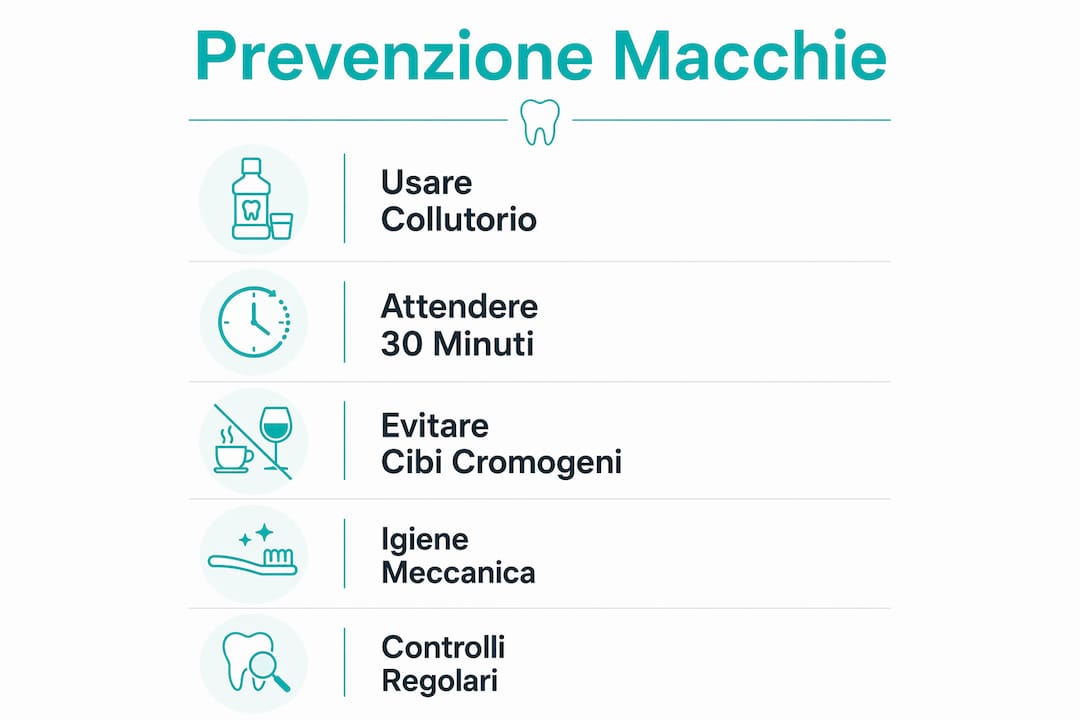
- Brush your teeth before using mouthwash, not after: mechanically removing plaque reduces the substrate on which pigments form.
- Limit coffee, tea, red wine, and smoking in the hours following the use of mouthwash, when chlorhexidine is still active on the tooth surfaces.
- Choose mouthwashes with an ADS system (Anti-Discoloration System): these products contain sodium metabisulfite and ascorbic acid, which inhibit both the Maillard reaction and the formation of metal sulfides. Mouthwashes with ADS maintain the antibacterial action intact without increasing the risk of discolorations.
- Do not exceed two applications per day and follow the duration prescribed by your dentist.
- Rinse thoroughly after use to reduce active residues on the surfaces.
Keep in mind that chromogenic foods are not the only factor: individual predisposition also plays a role. Some people develop stains even with proper use, while others show no trace of them.
A tip: wait at least 30 minutes after using mouthwash before drinking coffee or tea. During that time, chlorhexidine is still active, and the reaction with tannins is more intense.
How to remove stains caused by chlorhexidine
Chlorhexidine stains are superficial and are removed with professional hygiene. They do not require invasive treatments or aggressive whitening: an oral hygiene session with ultrasonic instruments and polishing with cups and fine abrasive pastes is generally sufficient.
What to expect from professional removal:
- Ultrasonic scaling: removes tartar and mineralized deposits that retain pigments.
- Polishing with polish paste: smooths the surfaces and removes residual superficial discolorations.
- Airflow (if available): pressurized stream of bicarbonate or erythritol, effective on cervical and interdental stains.
Avoid aggressive DIY remedies such as pure bicarbonate, charcoal used daily, or high-abrasivity toothpastes: they can remove some of the stains, but over time they wear down the enamel. For a safe approach to home whitening after professional removal, there are certified kits such as those from Esmile, designed not to damage the enamel.
If you are considering a more complete aesthetic path, you can explore professional dental aesthetics options to understand which treatments best suit your situation.
A tip: after the hygiene session, keep your teeth clean with an electric toothbrush and dental floss every day. Stains tend to reform more quickly on surfaces that are not perfectly smooth.
How to correctly use chlorhexidine mouthwash
Incorrect use is the main cause of chlorhexidine stains. Following your dentist's instructions reduces the risk of side effects without compromising antibacterial efficacy.
Practical guidelines:
- Duration: do not exceed 2–3 weeks of continuous use without a clinical reassessment.
- Frequency: twice a day, preferably after main meals.
- Method: rinse for 30–60 seconds with 10–15 ml of solution, then spit out without rinsing with water to maintain the residual effect.
- Orthodontic appliances and prostheses: hyperpigmentation interferes with bracket adhesion; remove stains before applying fixed appliances.
- Side effects to monitor: altered taste, burning sensation, dry mucous membranes. If they persist beyond the first few days, consult your dentist.
Do not use chlorhexidine as a substitute for daily brushing: it is a supplement, not an alternative. Mechanical hygiene remains the main protective factor against plaque and stains.
What alternatives exist to chlorhexidine mouthwashes?
When dental stains become a recurring problem or chlorhexidine treatment is no longer necessary, there are antibacterial mouthwashes that do not cause discolorations.
The main categories:
- Cetylpyridinium chloride (CPC) mouthwashes: decent antibacterial action, no risk of significant stains, suitable for long-term daily use.
- Mouthwashes with essential oils (thymol, eucalyptol, menthol, methyl salicylate): effective against plaque and gingivitis, without pigmenting effects. They are among the most studied alternatives to chlorhexidine for prolonged use.
- Fluoride mouthwashes: they do not have a comparable antibacterial action, but they protect the enamel and prevent cavities. Useful for daily maintenance.
- Low-concentration hydrogen peroxide mouthwashes: they have a mild whitening effect and do not cause brown stains; use sparingly to avoid irritating the mucous membranes.
The choice depends on the clinical indication. For acute gingivitis or post-operative care, chlorhexidine remains the most effective option. For daily maintenance, essential oil or CPC mouthwashes offer a good balance between efficacy and long-term tolerability. If after a chlorhexidine cycle you want to restore the brightness of your smile, you can explore professional whitening treatments as a next step.
Key points
Chlorhexidine causes superficial and reversible dental stains, preventable with careful mechanical hygiene, a reduction in chromogenic foods, and the use of mouthwashes with an ADS system.
| Point | Details |
|---|---|
| Reversible stains | Chlorhexidine discolorations are extrinsic and are removed with professional hygiene. |
| Chemical mechanism | Stains arise from the reaction with tannins and the formation of metal sulfides on plaque. |
| Prevention with ADS | Mouthwashes with an Anti-Discoloration System inhibit discolorations without reducing antibacterial action. |
| Recommended duration | Continuous use should not exceed 2–3 weeks without a dental reassessment. |
| Available alternatives | Essential oil or CPC mouthwashes offer antibacterial action without a long-term risk of stains. |
Do you have chlorhexidine stains? Esmile can help you restore whiteness

If you have already noticed discolorations after a chlorhexidine cycle, the next step is to remove them safely. Esmile offers CPNP-certified whitening kits, designed for home use and suitable even for sensitive teeth. Products with LED technology allow you to whiten your teeth at home gradually, without damaging the enamel. Over 300 people a day choose Esmile on Amazon Italy to treat stains from coffee, wine, smoking, and, indeed, chlorhexidine.
Discover the professional whitening kit by Esmile and rediscover a bright smile comfortably from home.