

Peroxide-free whitening: does it really work?
Yes, some peroxide-free whiteners work, but not all in the same way. PAP (phthalimidoperoxycaproic acid) formulas show concrete results in in vitro studies, while activated charcoal and abrasives remain limited to surface stains.
In short:
- PAP-based whitening treatments have shown effectiveness in in vitro studies, improving shade without eroding enamel.
- Peroxide-free products such as activated charcoal and optical pigments work through mechanical removal and optical effects, respectively, with temporary or superficial results.
- European regulations limit the peroxide concentration to a maximum of 0.1% in over-the-counter products, encouraging alternative formulas such as PAP.
- For realistic results, cycles of about two weeks are recommended for superficial stains, while intrinsic discolorations require longer and less predictable treatments.
- It is essential to consult a dentist before using home products, especially in the presence of cavities, gingivitis, or restorations, to prevent damage and irritation.
Table of Contents
- Does peroxide-free whitening work? What do studies on PAP say
- What types of peroxide-free whiteners exist and how do they work
- What EU regulations say about peroxide limits in products
- How long it takes and what results to realistically expect
- Who should avoid DIY and when to see a dentist
- How to maintain results and reduce sensitivity after treatment
- Professional opinion and certifications: what guarantees safety
- What is really worth remembering about these products
- Esmile peroxide-free kits: when to consider them
- Sources
- Frequently asked questions
Does peroxide-free whitening work? What do studies on PAP say
The question deserves an answer based on data, not on sensations. PAP is the most studied agent among peroxide alternatives, and the results, although limited to the laboratory, are encouraging.
One in vitro study on PAP+ tested a radical-free formulation on enamel samples exposed to polyphenol stains, typical of tea, coffee, and red wine. The result: the PAP+ gel did not erode the enamel or reduce its microhardness, and in this model it proved more effective than 6% hydrogen peroxide in removing polyphenol stains.
The surprising data: with repeated treatments, PAP+ improved the shade by up to about eight shades on the VITA® Bleachedguide scale, according to the same study, without signs of surface erosion.
A second piece of work, an in vitro comparative study between PAP and peroxides, strengthens the picture: PAP produced color changes similar to or greater than those obtained with hydrogen peroxide (HP) and carbamide peroxide (CP), but with fewer morphological alterations to the enamel and less loss of microhardness.
What emerges from these works:
- PAP works by epoxidation of the chromophoric molecules responsible for stains, a mechanism different from the radical mechanism of peroxide.
- Its effectiveness seems comparable to or greater than medium peroxide concentrations, at least in the tested models.
- Its impact on the enamel structure is lower compared to traditional peroxides.
It must be said clearly: these are in vitro studies, conducted on isolated enamel samples, not on real patients in daily clinical conditions. The samples are limited, and laboratory conditions do not perfectly replicate saliva, diet, or the habits of those who whiten their teeth at home. Larger clinical trials are needed before speaking of full equivalence with professional peroxides. But the direction of research is consistent: PAP is not marketing disguised as science, it has measurable foundations.
What types of peroxide-free whiteners exist and how do they work
Not all "peroxide-free" products work on the same principle. Understanding the difference avoids wrong expectations.
PAP remains the option with the most scientific support. It works better when the formula includes hydroxyapatite and buffering agents, which stabilize the pH and protect the enamel during application. Without these precautions, even a valid active ingredient can be less effective or more irritating to the gums.
Activated charcoal and abrasive toothpastes work through mechanical friction: they remove superficial coffee or smoke stains, but they do not change the intrinsic color of the tooth. Used too frequently or with particles that are too large, they risk wearing down the enamel over time.
Optical whiteners, often based on blue or purple pigments, do not whiten at all: they optically correct the yellow shade by applying a complementary pigment. The effect is immediate but temporary, disappearing with the next wash.
Then there are kits with non-personalized trays, pens, and generic powders. Here the problem is almost never the active ingredient, but the fit: non-custom trays create empty areas where the gel does not reach and areas of accumulation where it stagnates, with irregular results and a greater risk of gingival irritation.
Summarizing the main categories:
- PAP formulated with hydroxyapatite: effectiveness supported by laboratory tests, lower impact on enamel.
- Activated charcoal and abrasives: mechanical action on superficial stains, use should be limited over time.
- Optical pigments: immediate and non-permanent cosmetic effect.
- Generic kits with standard trays: results conditioned by the precision of the fit rather than the active ingredient.
A tip: before choosing a product, check if the sheet lists the percentage of active ingredient and the presence of remineralizing agents: a balanced formula counts more than the "natural" label on the packaging.
What EU regulations say about peroxide limits in products
EU Directive 2011/84 is the reason why many over-the-counter products do not contain peroxide in a truly effective dose. The regulation establishes that products intended for the final consumer cannot exceed 0.1% hydrogen peroxide concentration. Higher concentrations, up to 6%, are reserved for professional use under clinical supervision, as also confirmed by the updated text of the directive.
This limit explains the growth of alternative formulas like PAP: under the same regulatory constraints, an active ingredient different from peroxide can reach more effective concentrations without falling under the same restrictions.
The practical risks to be aware of remain concrete, regardless of the chosen active ingredient:
- Enamel erosion due to excessive or prolonged use of abrasives.
- Temporary tooth sensitivity, more frequent with aggressive or poorly buffered formulas.
- Gingival inflammation due to prolonged contact with gel on soft tissues, often linked to poorly fitted trays.
- Damage to restorations, crowns, or fillings not treated with the same product, which can discolor unevenly.
Professional sources in the dental sector also report that DIY remedies such as baking soda and lemon can damage enamel and gums more than a certified product. Choosing a product with CPNP certification, and not an improvised home remedy, remains the minimum safety standard.
How long it takes and what results to realistically expect
Results depend on the type of stain, not just the product. It is the most important distinction to understand before starting any treatment.
- Extrinsic stains (coffee, tea, wine, smoke): they deposit on the surface of the enamel and respond relatively quickly to PAP formulas or targeted abrasive treatments, often in one or two weeks of constant use.
- Intrinsic discolorations: internal tooth discolorations, linked to genetics, medications, or trauma, require longer cycles and less marked results with over-the-counter peroxide-free products.
- Teeth with crowns, fillings, or root canals: restoration materials do not change color like natural enamel, so whitening often creates a visible unevenness between the natural tooth and the restoration.
In in vitro studies on PAP+, the improvement observed with repeated treatments reached about eight shades on the VITA® Bleachedguide scale, but it is a laboratory finding, not a clinical promise generalizable to every mouth. In daily practice, expect a noticeable improvement on coffee or smoke stains in a couple of weeks, and more gradual results on dark or yellowish base shades.
Who should avoid DIY and when to see a dentist
Not all smiles are ideal candidates for home treatment, and recognizing it beforehand avoids damage that is difficult to correct.
Situations to consider risky:
- Active cavities or untreated lesions, which the gel can irritate or worsen.
- Ongoing gingivitis or periodontitis, with already inflamed tissues that are more sensitive to chemical contact.
- Extensive restorations (crowns, multiple fillings, bridges) in the area to be treated.
- Pregnancy, for general prudence regarding the use of non-essential chemical products.
- Minors, because the enamel is still maturing.
Before authorizing even home whitening, the dentist usually checks for the absence of cavities, the state of the gums, and the presence of visible restorations in the affected area. Skipping this check is not only risky on paper: without a preventive diagnosis, sudden acute pain or permanent damage to the enamel can manifest even with well-formulated products, simply because they were used on a mouth that was not ready to receive them.
How to maintain results and reduce sensitivity after treatment
Post-treatment sensitivity is not inevitable, but must be managed with the right tools. A clinical trial on MI Paste® has shown that CPP-ACP-based remineralizing pastes reduce sensitivity associated with whitening without compromising the obtained shade change.
Useful ingredients to look for in maintenance products:
- Potassium nitrate: acts on the dental pain channels, reducing the perception of sensitivity.
- Fluoride: strengthens the enamel and helps with superficial remineralization.
- CPP-ACP or hydroxyapatite: restore enamel microporosity without interfering with the chromatic result.
Even a randomized study on strips with low peroxide content and potassium nitrate confirmed that the addition of desensitizers reduces adverse effects without penalizing aesthetic effectiveness, a principle also valid for peroxide-free formulas.
In the post-treatment routine, avoid strongly pigmented foods in the first 24-48 hours and choose mild toothpastes, without aggressive abrasives. For those who want to delve deeper into specific strategies for sensitive teeth after whitening, there are dedicated protocols that integrate these principles.
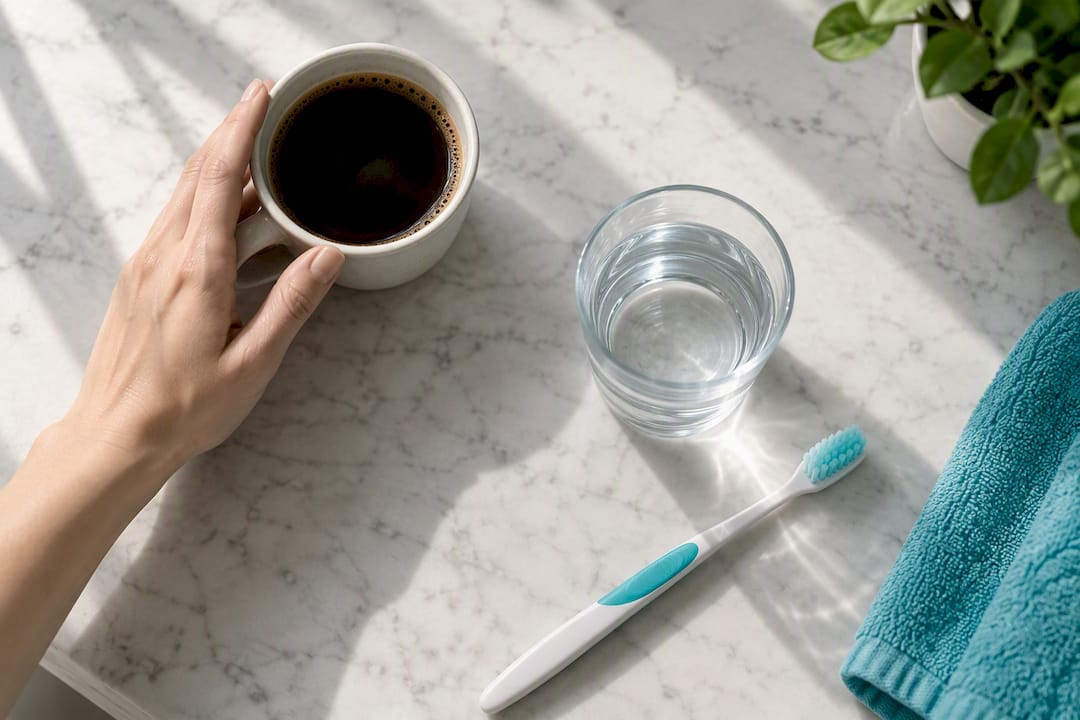
if sensitivity persists beyond 48 hours after treatment, suspend and evaluate a specific desensitizing product before resuming, instead of continuing to force the sessions.
Professional opinion and certifications: what guarantees safety
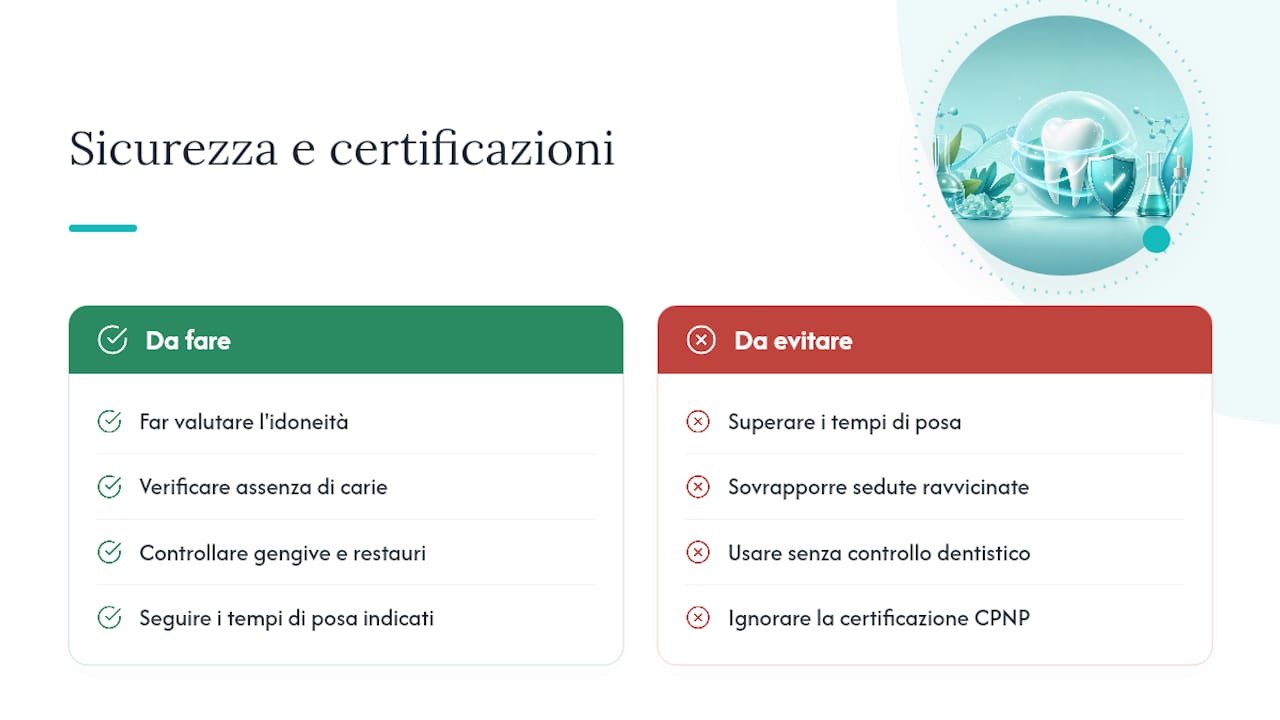
According to the opinion of Dr. Marilena Troise, suitability for a home whitening treatment must always be evaluated before starting, checking for the absence of cavities, the state of the gums, and the presence of visible restorations, and following protocols that do not exceed the application times indicated on the label.
Esmile was born with a specific approach: whitening kits, strips, gels, and activated charcoal powders, all CPNP certified, designed for those who want to address coffee, wine, or smoke stains without going to the dental office for every session.
CPNP certification is not a bureaucratic detail: it guarantees that the formula has been notified and evaluated according to European cosmetic safety standards, a minimum requirement that every home whitening product should meet before reaching the market.
In daily practice, the effectiveness of a home kit depends as much on the formula as on correct use: respect the indicated application times, do not overlap sessions too close together, and use the gel refills when the original product provides a programmed maintenance cycle, not just a single use.
What is really worth remembering about these products
PAP research shows something that DIY whitening marketing tends to ignore: the absence of peroxide is not a value in itself, it is the quality of the formulation that makes the difference. A peroxide-free product that is poorly buffered can irritate the gums as much as a poorly used peroxide.
Conventional wisdom pushes consumers to choose based on a label ("peroxide-free", "natural") instead of based on data. This is the most common mistake: looking for the absence of an ingredient instead of checking for concrete evidence of what replaces it.
Those who want real results should first check if the product mentions PAP or other documented active ingredients, then check the CPNP certification, and only at the end look at the price. The reverse order, unfortunately, is the most common among those who buy impulsively online.
— Esmile
Esmile peroxide-free kits: when to consider them
If coffee, wine, or smoking stains are your main concern and you want a solution based on documented scientific principles, without the cost of repeated professional appointments, Esmile kits are a practical option to consider.

The range includes complete whitening kits, whitening strips for those who prefer a format that is easier to incorporate into their daily routine, and gel refills to prolong the effect over time without having to repurchase the entire kit. All products are CPNP certified and formulated for sensitive teeth as well, with LED technology and UV sterilization that accompany the application of the gel.
Those with recent superficial stains generally achieve faster results than those who have lived with long-standing discoloration for a longer time: in the latter case, more consistent maintenance cycles are needed, supported precisely by the gel refills. If you have already assessed suitability with your dentist and are looking for a peroxide-free alternative with verifiable certification, the Esmile product page is the right starting point to choose the kit best suited to your case.
Sources
To learn more about the data cited in this article, EU Directive 2011/84 remains the primary regulatory reference on peroxide limits in cosmetic products. In vitro studies on PAP, available on PubMed, offer technical details on the mechanisms of action and comparisons with traditional peroxides.
For those looking for practical insights on related topics, the guides on whitening and bruxism and on coffee stains and specific treatments are useful. To better understand the origin of coffee stains at the level of beverage preparation, this analysis on coffee extraction may also be useful.
This article provides general information and does not replace the opinion of a qualified medical professional. Consult a qualified healthcare professional regarding your specific case before acting based on this content.
- A Radical-Free Approach to Teeth Whitening (PAP+ study)
- Phthalimidoperoxycaproic Acid (PAP) Versus Peroxides and Impact on Dental Enamel After Whitening Treatment: An In Vitro Study
- Directive 2011/84/EU
- MI Paste® reduces sensitivity associated with vital tooth bleaching
- Randomized trial: whitening strips with 3% H2O2 and 1.5% potassium nitrate
Frequently Asked Questions
Does peroxide-free whitening really work?
Yes, in particular, PAP-based formulas show measurable results in in vitro studies, with shade improvements comparable to or greater than those of traditional peroxides. However, effectiveness depends on the quality of the formula, not just the absence of peroxide.
Does hydrogen peroxide ruin teeth?
Hydrogen peroxide, if used within regulatory limits and under supervision, does not systematically damage teeth, but excessive use or unregulated concentrations can cause erosion and sensitivity. For this reason, EU Directive 2011/84 limits over-the-counter products to 0.1%.
What are the contraindications for carbamide peroxide in teeth whitening?
Active cavities, ongoing gingivitis, extensive untreated restorations, and pregnancy are the main situations in which carbamide peroxide should be avoided or used only after a dental evaluation. Even for peroxide-free products, these conditions remain risk factors to report before treatment.
Can teeth whitening damage teeth?
Yes, if the product is not certified or use is incorrect, with risks of enamel erosion and gum irritation, regardless of the active ingredient chosen. Choosing CPNP certified products like those from Esmile and following the indicated application times significantly reduces this risk.
How much do Esmile peroxide-free whitening kits cost?
Prices vary depending on the chosen line (kit, strips, gel, or refills) and are indicated directly on the Esmile product pages. The site also reports a money-back guarantee within a period indicated in the terms of sale.


