

Cost of dentist teeth whitening: how much you spend at home in 2026
To whiten your teeth effectively and safely at home, you can spend between approximately €20 and €350 depending on the type of kit: over-the-counter products cost €20–80 and lighten by 1–2 shades, while a professional at-home kit with a tray or LED lamp costs €200–350 and can lighten by 2–4 shades. Neither changes the natural color of the tooth, but both effectively remove surface stains from coffee, tea, wine, and smoking.
In short:
- Over-the-counter kits, costing between €20 and €80, only lighten by 1–2 shades and are suitable for quick touch-ups and mild stains.
- Professional kits with an LED lamp, costing up to €350, guarantee a more effective and long-lasting action, with whitening of up to 4 shades.
- The concentration of hydrogen peroxide in European OTC products is limited to 0.1%, while professional products can have higher concentrations under supervision.
- The total cost depends on the number of applications, refills, and the quality of the device, so recurring costs over time must be considered.
- It is important to check the CPNP certification, follow the instructions for sensitive teeth, and prefer products with refills to keep costs down in the long term.
Table of Contents
- Dental whitening cost: practical comparison between price ranges
- What factors affect the price and results of the kit
- How to choose a safe whitening kit in Italy
- What I really think about DIY whitening
- The right Esmile kit for every whitening need
- Sources
- Frequently Asked Questions
Dental whitening cost: practical comparison between price ranges
The cost of at-home whitening varies mainly based on the technology used and the number of applications included in the kit. The simplest over-the-counter products, such as strips or powders, cost little but only act on the outermost layer of the enamel. Professional at-home kits, which often include carbamide peroxide-based gels and an LED device, cost more but deliver more pronounced and long-lasting results.
| Category | Estimated Cost | Expected Result | Effect Duration | Time per Cycle | Suitable for Sensitive Teeth | Refills Available |
|---|---|---|---|---|---|---|
| Whitening Strips | €20–40 | 1 shade, mild stains | 1–3 months | 30 minutes a day, 7–14 days | Yes, generally | No |
| Activated Charcoal Powder | €20–80 | Maintenance, shine | Continuous use | Daily use | Yes | No |
| LED Kit with Peroxide-Free Gel | €40–80 | 1–2 shades | 2–4 months | Variable duration and number of applications | Yes | Yes, separate pens |
| Professional At-Home Kit (Tray/LED with Dosed Gel) | €200–350 | 2–4 shades | 6–12 months | 20–30 minutes, 7–14-day cycle | Depends on concentration | Often included |
Each category has its own strengths:
- Strips are ideal for those who only want to reduce mild stains before an event, without a financial commitment.
- LED kits with refills reward those who will use the product multiple times a year, as the cost per application decreases.
- The professional at-home kit makes sense for those starting with more intense stains (smoking, daily coffee) who want a visible jump in shades.
- Activated charcoal powder works well as a finishing touch between cycles, not as a primary treatment.
Those looking only for a quick touch-up before an occasion can stop at the most affordable category. Those with stains established over years of coffee or wine will do well to consider a kit with more applications included, because the result lasts longer and the cost per shade gained decreases.
What factors affect the price and results of the kit
The first factor is the concentration of the whitening agent. European regulations set a maximum limit of 0.1% hydrogen peroxide for over-the-counter products, a limit designed to protect the enamel and gums without clinical supervision. Kits with higher concentrations exist only in the professional dental field, not among products that can be freely purchased online.
Other elements that affect the final price:
- Number of applications included: a kit with ten sessions costs more at purchase but less per individual treatment than one with only three applications.
- Availability of refills: choosing a device compatible with separate refill pens significantly reduces spending over time compared to buying a whole new kit every time.
- Quality of the tray or LED device: a poorly fitting tray distributes the gel unevenly and produces uneven light patches.
- Certifications: the CPNP marking indicates that the product has been notified to the competent authorities according to European cosmetic standards.
One piece of advice: before starting any cycle, have your dentist remove plaque and tartar: the clean surface allows the gel to react evenly and reduces the risk of patchy stains.
How to choose a safe whitening kit in Italy
Before ordering online, check a few concrete points that separate a reliable product from a risky one.
- Check the CPNP certification and the concentration declared on the label: if the seller does not specify it, it is a red flag.
- Evaluate the cost of refills, not just the price of the initial kit: an inexpensive device with expensive refills can end up costing more over time.
- Read reviews from Italian buyers to understand how the product performs on sensitive teeth or with old visible fillings.
- Ask for a preliminary professional cleaning if you haven't had a dental check-up in over a year, so you avoid whitening over plaque or tartar.
- Consult a dentist before the kit if you have inflamed gums, untreated cavities, or teeth that are very sensitive to cold.
| What to check | Why it matters |
|---|---|
| Declared concentration | Must comply with the EU limit of 0.1% for OTC products |
| CPNP certification | Guarantees notification to European cosmetic authorities |
| Cost of refills | Determines the actual cost in the medium term |
| Verified Italian reviews | Indicate actual compatibility with sensitive teeth |
Professional at-home kits remain the most effective choice for pronounced extrinsic stains, while over-the-counter products are suitable for maintenance and light touch-ups. Beware of uncertified DIY remedies: they can damage the enamel and gums if used indiscriminately. For those who want to supplement the at-home process with a professional check-up, some dental offices use management software such as Treatbase to schedule visits and follow-ups.
What I really think about DIY whitening
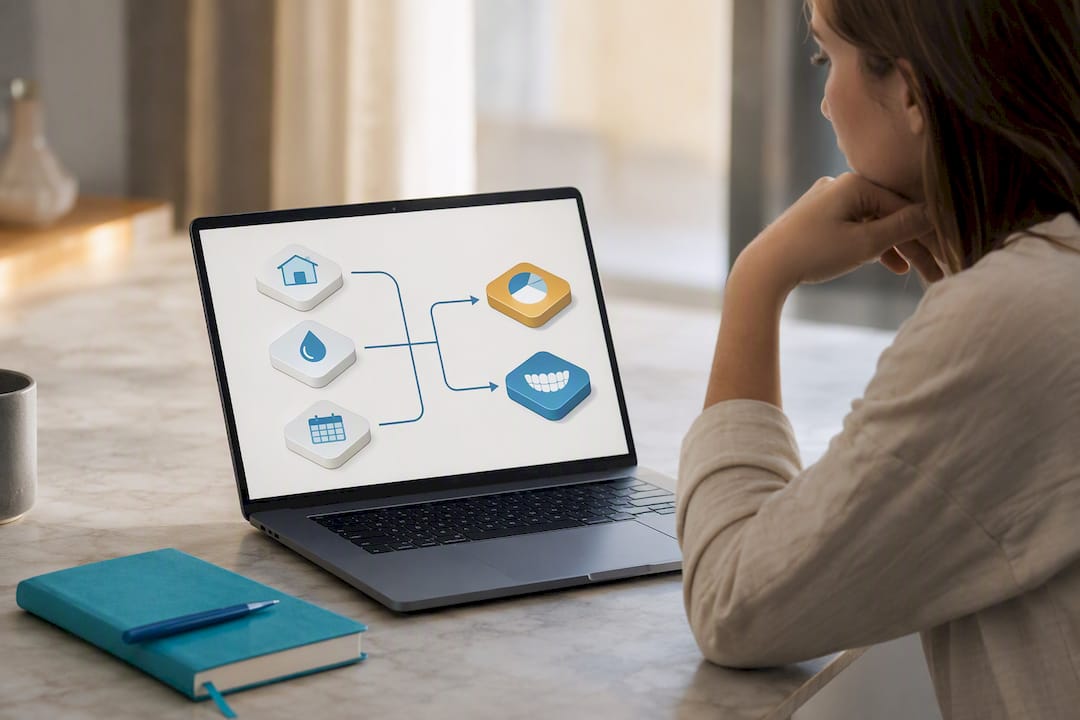
The most widespread, and most mistaken, belief is that «the stronger the product, the better the result». In reality, the variable that matters most is not the concentration, which in the EU is anyway calibrated to a safety limit, but consistency in use and the initial cleaning of the teeth. A €40 kit used properly, on teeth already cleaned by the dentist, often beats a €300 kit used once and abandoned.
The purchasing guide that is almost always missing online is that on hidden costs: not the price of the kit, but how much you spend on refills over the course of a year if coffee or wine stains return regularly. Those who only evaluate the initial purchase price often end up spending more than expected. Before choosing, calculate the cost per application over time, not just the cost at the checkout.
— Esmile
The right Esmile kit for every whitening need
Those looking for an at-home process with available refills and CPNP certification find in Esmile's Professional Teeth Whitening Kit a solid foundation for removing coffee, tea, wine, and smoke stains without going to the dental office.

The LED kit works together with the refill pens for the LED lamp, designed to extend the treatment cycle without buying a new device every time, keeping the cost per application low over time. Those who want lighter daily maintenance can pair it with activated charcoal whitening powder or opt for an even faster solution with the entire range of Esmile products. All products are CPNP-certified and also designed for those with sensitive teeth. If you want to start right away, choose the LED kit as a base and evaluate the refills based on how often you drink coffee, tea, or wine: it is the most concrete way to understand which combination really suits you.
Sources
- EU regulations Tooh Whitening (IT) - SDI
- Dental Whitening: Cost, Methods and Results in 2026 | Studio Dentistico Temprendola
- Whiten your teeth at home with professional kits | Valle Agno Dentale
- Complete guide to at-home dental whitening | Studio Blunda
Frequently Asked Questions
How much does dental whitening cost compared to an at-home kit?
In-office dental whitening typically costs between €150 and €600 depending on the technique used, compared to €20–350 for a complete at-home kit with refills.
How much do at-home kits realistically whiten?
Over-the-counter kits generally whiten by 1–2 shades, while professional at-home kits reach 2–4 shades, always acting only on surface stains.
Are whitening kits safe for sensitive teeth?
Many CPNP-certified kits are formulated to be compatible with sensitive teeth, but it is still useful to stop use in case of persistent discomfort.
What is the legal limit of peroxide in over-the-counter products in Italy?
European regulations set the maximum limit at 0.1% hydrogen peroxide for whitening products sold without dental supervision.
Do refills really reduce the cost over time?
Yes: a device compatible with separate refill pens lowers the cost per application compared to buying a new complete kit every cycle.


