Whitening pen: how to use it, how long it lasts and contraindications
To use a whitening pen correctly, apply a thin layer of gel to dry teeth and follow the manufacturer's recommended exposure time. The basic procedure is simple: dry your teeth, apply the gel with the brush avoiding the gums and mucous membranes, leave it on for 1 to 30 minutes (some overnight formulas remain on all night) and do not eat or drink for the recommended time. A typical cycle involves one application per day for a variable period, depending on the concentration of the product.
Some quick tips to always keep in mind:
- Do not swallow the gel and rinse your mouth immediately in case of accidental ingestion.
- Avoid contact with the gums, lips, and eyes; in case of contact, rinse thoroughly with water.
- Consult your dentist before starting if you have untreated cavities, periodontitis, or mucosal lesions.
- Choose products with CPNP registration that comply with EU regulations: it is the most reliable sign of safety on the Italian market. Esmile, for example, is CPNP certified and available in Italy.
Key points
Using a whitening pen correctly means applying it to clean, dry teeth, following the manufacturer's exposure times, and choosing the right formula for your needs, distinguishing between real chemical action and a temporary cosmetic effect.
| Point | Details |
|---|---|
| Preparation before use | Brush your teeth, use dental floss, and dry the surface: plaque and moisture reduce the gel's effectiveness. |
| Variable exposure times | Most products indicate 20–30 minutes; some overnight formulas remain on longer. Always follow the package insert. |
| Cosmetic effect vs. chemical whitening | Pigment-based formulas last a few hours; peroxide formulas require 7–14 days for stable results. |
| When to stop | Stop use in case of persistent irritation, swelling, or pain, and consult your dentist before resuming. |
| Esmile as a certified option | Esmile products, CPNP certified and available in Italy, include formulas for sensitive teeth and kits with LED technology. |
Table of Contents
- What is a whitening pen and what formulas can you find on the market?
- How do whitening agents work on enamel and stains?
- How to use a whitening pen: step-by-step instructions
- How long does the effect last and how to maintain it over time?
- Contraindications and side effects: when to stop
- When a pen is not enough: alternatives to consider with your dentist
- What dentists say and what Italian regulations require
- Esmile kits and pens: where to find them in Italy
- Sources
What is a whitening pen and what formulas can you find on the market?
A whitening pen is a compact applicator, usually shaped like a stick or pencil, equipped with a brush or sponge that dispenses gel directly onto the teeth. Its practicality makes it suitable for home use and maintenance between professional appointments.
The types of formulas available on the market are essentially four:
- Carbamide or hydrogen peroxide: oxidizing chemical agents that penetrate the enamel and discolor the organic pigments responsible for stains. These are the formulas with the best-documented whitening action.
- Urea peroxide: a variant of carbamide peroxide, often used at lower concentrations to reduce sensitivity.
- Hydroxyapatite and potassium chloride: desensitizing ingredients that protect the enamel and reduce post-treatment discomfort; some formulas combine them with mild whitening agents.
- Opacifying pigments: they do not chemically whiten, but create a white film on the tooth surface with an immediate optical effect. The effect lasts a few hours and requires frequent reapplication.
The distinction between chemical formulas and cosmetic formulas is the point that most often creates false expectations. The former produce real, progressive whitening; the latter offer a quick but temporary visual result. Reading the list of ingredients before purchasing makes a difference.
How do whitening agents work on enamel and stains?
Peroxides, once in contact with enamel, release reactive oxygen that breaks the chemical bonds of organic pigments deposited in the porous structure of the tooth. Coffee, tea, red wine, and smoke leave colored molecules that become embedded in the enamel over time: oxidation gradually discolors them.

Formulas with hydroxyapatite and potassium chloride work differently: hydroxyapatite occludes exposed dentinal tubules, reducing the transmission of painful stimuli, while potassium chloride stabilizes the membrane potential of nerve fibers. The result is less sensitivity during and after treatment, useful for those who already have reactive teeth.
Three physiological limits to know before starting:
- Pens do not remove deep intrinsic discolorations, such as those caused by tetracyclines or severe fluorosis: these stains are inside the dentin and require professional treatments.
- Effectiveness depends on the cleanliness of the surface: plaque and food residues form a barrier that prevents the gel from adhering to the enamel.
- The surface must be dry: moisture dilutes the gel and reduces its active concentration.
How to use a whitening pen: step-by-step instructions
A thorough preparation makes the difference between a visible result and a mediocre one. Follow this sequence:
- Brush your teeth with your normal toothbrush and toothpaste, then use dental floss to remove residues between the teeth.
- Dry the surface with a paper towel or gauze: it is the step that is most often skipped, but it is the one that guarantees the adhesion of the gel.
- Activate the pen by turning or pressing the dispensing mechanism until the gel appears on the brush.
- Apply the gel with light and even movements over the entire visible surface of the teeth, starting with the incisors. Keep your lips open and away from your teeth for the first few seconds, so that the gel dries without being removed.
- Follow the exposure time indicated by the manufacturer: many products indicate an exposure time that can vary from a few minutes to about half an hour, others provide shorter times or overnight applications. Do not improvise the times.
- After the exposure time, do not rinse your mouth for the recommended period, avoid coloring foods and beverages for at least one hour, and do not smoke.
What not to do:
- Do not apply the gel to gums, mucous membranes, or teeth with untreated cavities.
- Do not increase the frequency thinking you will speed up the results: you risk irritation and sensitivity.
- Do not use the pen if you have open lesions in your mouth or are undergoing active periodontal therapies.
A tip: use the pen in the evening, shortly before going to sleep. At night you do not eat, drink, or talk: the gel stays on the teeth longer without being mechanically removed, and the results tend to be more even.
How long does the effect last and how to maintain it over time?
The times depend on the type of formula. Pens with opacifying pigments give a visible result in a few minutes, but it fades within a few hours. Peroxide-based formulas, on the other hand, require a complete cycle: the first effects are noticeable after one or two applications, but a stable result requires several weeks of continuous treatment.
How long does the achieved whiteness last? It depends on four main variables:
- Diet: coffee, tea, red wine, and dark fruit juices are the main enemies of the result. Reducing them or rinsing your mouth after consumption prolongs the effect.
- Smoking: nicotine and tar stain the enamel quickly and persistently; without quitting smoking, any treatment loses effectiveness in a few weeks.
- Daily oral hygiene: brushing your teeth at least twice a day and using dental floss reduces the accumulation of pigments.
- Enamel porosity: more porous enamel absorbs stains faster; in these cases, maintenance cycles must be more frequent.
To maintain the result over time, plan touch-up applications every 3–4 weeks if you are daily exposed to staining factors. If, instead, your lifestyle is less aggressive on the enamel, a cycle every 2–3 months may be sufficient.
Contraindications and side effects: when to stop
The most common side effects are mild and temporary: a slight tingling during application, sensitivity to cold or hot foods in the following hours, and gum irritation if the gel touches the mucous membranes. In case of contact with gums or mucous membranes, the gel can cause burning; stop use and rinse thoroughly.
The main contraindications:
- Untreated cavities: the gel can penetrate the cavities and cause acute pain or damage to the pulp.
- Active periodontal diseases: inflamed or receding gums react poorly to peroxides.
- Mucosal lesions: ulcers, canker sores, or wounds in the mouth make use not recommended until healed.
- Known ingredient allergies: always read the INCI list before applying any product.
- Age: follow the manufacturer's instructions; many products are not recommended for minors under 18 years of age.
In case of accidental ingestion of small amounts of gel, drink plenty of water. If the quantity is significant or symptoms such as nausea or burning appear, contact the Emergency Room or Poison Control Center. For contact with the eyes, rinse with running water for at least 15 minutes and consult a doctor if the discomfort persists.
Use the pen only for short cycles as indicated by the manufacturer and stop immediately if persistent redness, swelling, or pain appears. In these cases, consult your dentist before resuming treatment. To learn more about the side effects of whitening, you will find a dedicated guide on the Esmile website.
When a pen is not enough: alternatives to consider with your dentist
The whitening pen is effective on superficial stains from coffee, tea, wine, and smoke. However, when faced with deeper discolorations, its limitations become evident. Tetracycline stains, severe fluorosis, and intrinsic dentin discolorations do not respond to the low-concentration peroxides used in home pens.
In these cases, the alternatives to consider with your dentist are:
- Professional in-office whitening (bleaching): uses much higher concentrations of peroxide, often activated with LED light or a lamp. The results are faster and more durable, but require a prior assessment of oral health.
- Custom trays with high-concentration gel: the dentist creates a custom-made mold and provides a more powerful gel to use at home for controlled cycles. They are a middle ground between DIY and in-office treatment. You can learn more about the safety and contraindications of trays to understand if they are right for you.
- High-efficacy strips: they cover a wider surface than the pen and keep the gel in contact with the teeth for longer. They are useful as an intermediate alternative. For a detailed comparison, the Esmile guide on whitening strips is a good starting point.
- Professional LED light treatments: they combine the chemical action of the gel with photochemical activation to speed up the oxidation process.
The criterion for choosing is simple: the deeper or more extensive the discoloration, the more a specialist assessment is needed before proceeding. A visit to the dentist is not just a precaution: it is the fastest way to understand which treatment will truly give results in your specific case.
What dentists say and what Italian regulations require
This clinical recommendation summarizes well the position of most dentists: the pen is a useful tool, but not the right starting point for those who have never had a recent check-up.
On the regulatory front, in Italy, cosmetic products for tooth whitening must comply with EU Regulation 1223/2009 and, when placed on the market, be registered in the CPNP portal (Cosmetic Products Notification Portal). Institutional checks by the Ministry of Health allow for the monitoring of the compliance of cosmetic products on the market: it is a useful resource before purchasing.
Some practical tips to keep in mind:
- Always check that the product displays the CPNP registration and complete information on the label (INCI list, warnings, manufacturer or EU responsible person).
- Dentists consider the pen a maintenance tool between professional appointments or for superficial stains, not a substitute for in-office bleaching.
- For those with sensitive teeth, formulas with desensitizing agents such as hydroxyapatite and potassium chloride are preferable to standard formulas based on pure peroxide.
- Esmile products are CPNP certified and also formulated for sensitive teeth, with clear directions for use and customer support available for questions about application.
Our point of view on the daily use of the whitening pen
Those who use the whitening pen for the first time often expect an immediate and definitive result. The reality is more nuanced, and knowing it in advance avoids disappointment.
Peroxide-based formulas work, but require consistency: a cycle interrupted halfway does not give stable results. Cosmetic pigment formulas, on the other hand, are perfect for an evening event or a photo, but do not replace a real treatment. Confusing the two categories is the most frequent error we observe in Esmile customer feedback.
Another point that often emerges: those who already have sensitive teeth tend to overdo the frequency thinking they will speed up the results. The result is the opposite: increased sensitivity, interrupted use, no improvement. Reducing the frequency and choosing a desensitizing formula almost always leads to better and more durable results.
The pen is a valid tool in the right context: superficial stains, maintenance between professional appointments, or a touch of whiteness before an important occasion. For everything else, the dentist remains the point of reference.
Esmile kits and pens: where to find them in Italy
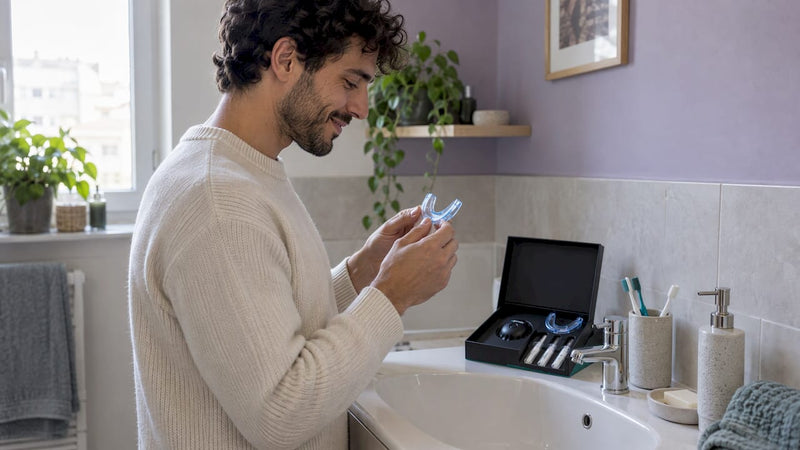
Those looking for a practical solution for maintaining whiteness at home will find Esmile products to be a concrete and certified option. The range includes maintenance pens, peroxide-free whitening strips, and complete kits with LED technology, all CPNP certified and formulated even for sensitive teeth.

The main advantage compared to many generic products available online is the combination of safety certification, formulas designed for home use, and accessible customer support for questions about application. Over 300 people a day choose Esmile on Amazon Italy, and the professional kits include accessories such as gel refills and LED devices for more comprehensive results.
If you want to start with a more structured treatment, the Esmile professional whitening kit is available directly on the website with express shipping in Italy. For those who already have a good starting point and are only looking for maintenance, the pen is the right tool: you can find the entire range on Esmile.
Sources
To learn more about the topics covered in this guide, here are the main references consulted:
- Teeth whitening pen: advice and contraindications
- Teeth Whitening Pen for Whiter Teeth: does it work?
- Teeth whitening pen - il Dottore dei Denti
- Teeth whitening pen | Teeth whitening pencil - Notino
- Health
This information is general in nature and does not replace the advice of your dentist. For specific situations or oral conditions, always consult a qualified professional.
This article provides general information and does not replace the advice of a qualified medical professional. Consult a qualified healthcare professional regarding your specific case before acting based on this content.