

Whitening of non-vital teeth: when at-home kits work
Yes: with a certified at-home kit you can gradually and safely lighten stains from coffee, tea, wine or smoke, provided the enamel is healthy and there are no active cavities. The result depends on following the instructions correctly, monitoring sensitivity, and maintaining the results in the following months. There are lines of certified kits designed for this type of superficial discoloration.
In short:
- Certified whitening kits are only effective on superficial extrinsic stains from coffee, tea, wine and smoke, not on deeper intrinsic discoloration.
- It is essential to check that the enamel is intact, free of cavities, and that there are no prosthetics or fillings, otherwise the treatment could be ineffective or harmful.
- Custom-fit trays and applications with LED light improve results, but do not speed up the process beyond the recommended times, reducing the risk of sensitivity.
- Dental sensitivity is the most common and temporary side effect, while gum irritation is avoided with accurate applications and well-fitting trays.
- To make the results last, it is advisable to limit coffee, wine and cigarettes in the first 48 hours post-treatment and use techniques such as straws and remineralizing toothpastes.
Table of Contents
- When the at-home kit is the right choice
- How the kits work: gel, trays and LED light
- Safety: side effects and what to check before purchasing
- What to expect: timing, duration and maintenance of the results
- Why choose certified protocols instead of DIY
- The Esmile kit for coffee, tea, wine and smoke stains
- Sources
- Frequently Asked Questions
When the at-home kit is the right choice
The at-home kit works well on extrinsic stains, those that deposit on the surface of the enamel due to coffee, tea, red wine or cigarette smoke. They are different from intrinsic discoloration, which originates inside the tooth due to genetic reasons, trauma or medication taken during childhood, and which a gel applied on the surface cannot lighten.
Before purchasing a product, check for some signs:
- The enamel is intact, without visible cracks or dull areas.
- The discoloration is mild or moderate, not a marked and uniform yellowing across the entire arch.
- There are no active cavities, abscesses or gums that bleed at the slightest contact.
- You do not have fillings or crowns visible in the area you want to treat, because prosthetic materials do not react to the gel like natural enamel.
If you notice spontaneous pain, existing sensitivity to cold or swollen gums, it is best to speak with your dentist first. A quick check avoids applying a treatment to a problem that requires a different diagnosis.
How the kits work: gel, trays and LED light
The active ingredient of professional at-home kits is almost always a low-concentration peroxide, formulated to act gradually without attacking the enamel. The gel penetrates the pores of the tooth surface and breaks down the pigments responsible for the stain, a process that is slower but also more controlled than the one used in dental offices.
Trays can be preformed, adaptable with hot water, or custom-made from an impression. Custom-fit trays guarantee a more uniform contact of the gel with the entire tooth surface and reduce the risk of the product touching the gums, while preformed ones remain a practical solution for simple daily use.
LED light, when present, does not whiten on its own: it accelerates the chemical reaction of the gel, reducing the application times needed to see results.
A typical cycle follows these steps:
- Brush your teeth and dry them well before application.
- Distribute the gel in the tray in a moderate amount.
- Wear the tray, with or without LED activation, for the time indicated by the manufacturer.
- Remove, rinse your mouth and repeat the cycle in the following days according to the kit protocol.
A tip: never increase the application time “to go faster”. Peroxide works in minutes, not hours: exceeding the indicated duration only increases the risk of sensitivity without improving the result.
Safety: side effects and what to check before purchasing
Dental sensitivity is the most common side effect during an at-home whitening cycle. It usually appears in the first days of treatment, manifests as an unpleasant reactivity to cold and tends to disappear on its own within 24 or 48 hours after the end of the cycle. A desensitizing toothpaste or a one-day break between applications reduces discomfort without compromising the final result.
Less frequent but still possible is gum irritation, almost always due to an excess of gel leaking from the tray or prolonged contact with the soft tissue. Applying a measured amount of product and using well-fitting trays prevents the problem at the root.
Some conditions require a medical consultation before starting:
- Untreated cavities or active gingivitis.
- Pregnancy or breastfeeding.
- Presence of extensive dental work in the area to be treated.
At-home kits sold as cosmetic products on the European market must comply with the cosmetic regulation with the relative CPNP notification, a minimum safety guarantee on the concentration of active ingredients. Checking this certification before purchasing is the simplest way to exclude non-compliant products.
What to expect: timing, duration and maintenance of the results
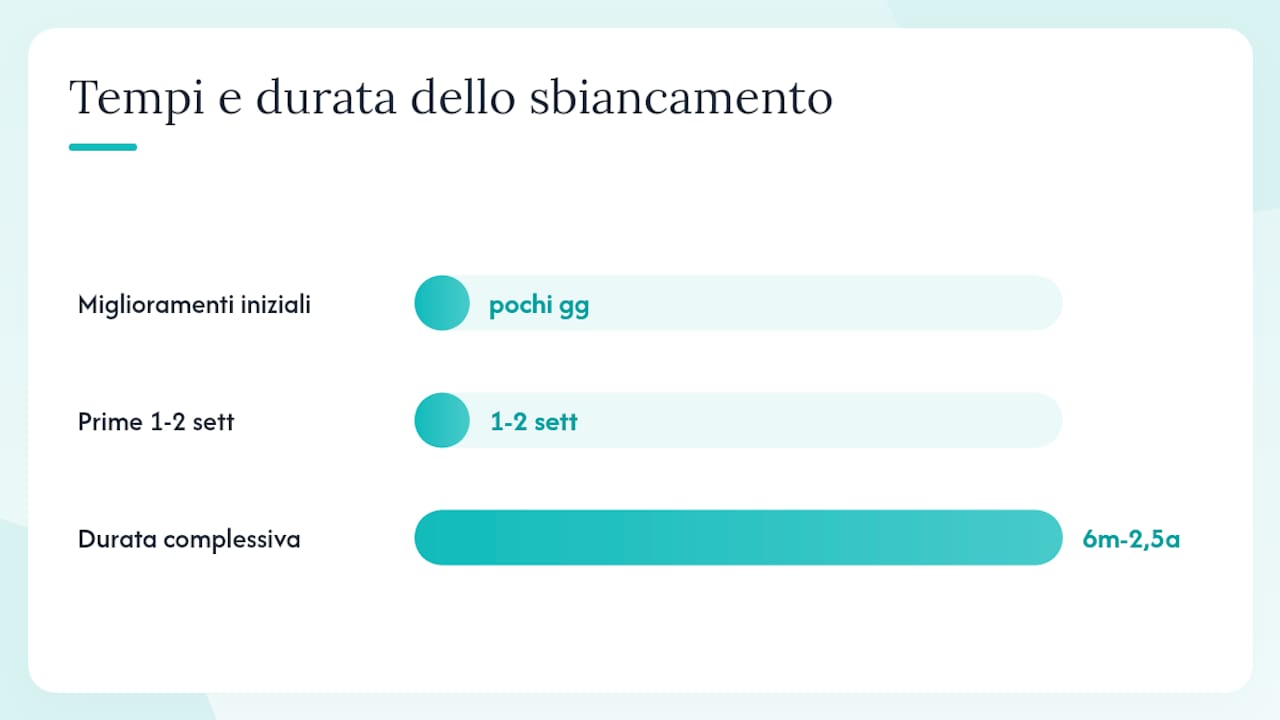
The first visible improvements generally arrive after a few days of treatment, with more marked progress within the first or first two weeks of consistent use. The overall duration of the result varies from six months to two and a half years, depending on how much coffee, tea, wine or cigarettes the tooth encounters in daily life.
The first 48 hours after each application are the most delicate: the enamel remains temporarily more porous and absorbs pigments more easily than usual. Avoiding coffee, tea, wine and other colored foods in this window makes the difference between a result that lasts and one that fades in a few days.
To prolong the effect over time:
- Use a straw for dark drinks: it reduces direct contact with the front teeth.
- Choose a remineralizing toothpaste in the weeks following the treatment.
- Schedule a small touch-up every three or four months if you drink coffee or wine regularly.
A tip: if you smoke, whitening still works, but smoking remains the main cause of early recurrence of stains: even just spacing out cigarettes in the first weeks after treatment significantly prolongs the result. You can find more detailed instructions in the guide to maintaining whitening by Esmile.
Why choose certified protocols instead of DIY
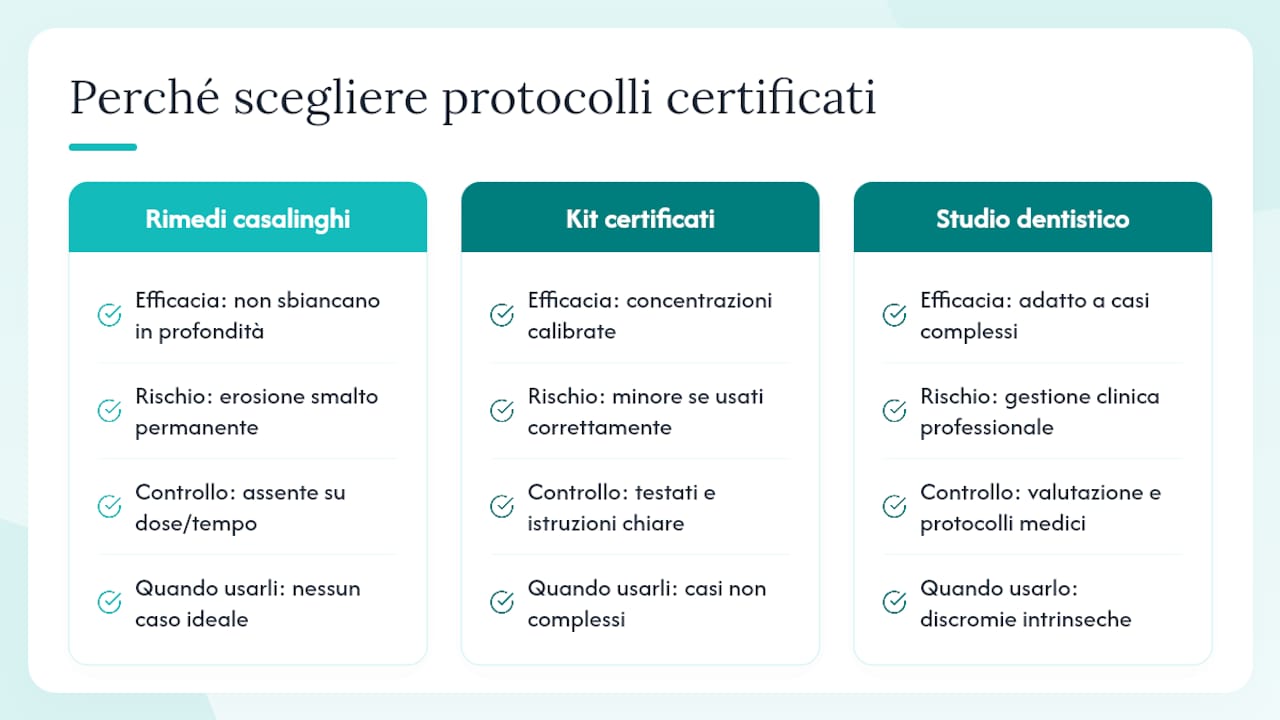
Baking soda, lemon or vinegar remain among the most searched remedies online, but they do not whiten deeply and risk eroding the enamel permanently. A certified kit works with calibrated and tested concentrations, while a homemade acid acts without any control over the dose or contact time.
There are cases where the in-office path is the only sensible way: intrinsic discoloration, teeth with extensive prosthetic work, or clinical situations that a bench gel cannot address. In all other cases, a certified product, used according to the instructions, remains the most balanced choice between efficacy and safety. Esmile's educational pages delve into specific cases, such as whitening in the presence of bruxism or strategies dedicated to smokers, useful to understand if your case requires special precautions.
— Esmile
The Esmile kit for coffee, tea, wine and smoke stains
If you are looking for a practical starting point, Esmile's professional whitening kit includes low-dose peroxide-based gels, trays and, in the LED versions, a light source to accelerate the reaction during each application.

The product is CPNP certified and also designed for those who have sensitive teeth, with concentrations designed for gradual use without attacking the enamel. It is a solution to address the stains left by coffee, tea, red wine and cigarettes, without the cost or timing of an in-office treatment. You can consult the Esmile professional whitening kit page for details on content, method of use and options for sensitive teeth, or explore the entire collection of whitening products if you want to combine strips or pens for maintaining the result over time.
Sources
For those who want to delve deeper into the protocols described in this article, some clinical resources offer a more technical overview:
- At-home whitening guide — SiDental
- At-home whitening — Studio dentistico Fadda
- At-home whitening — Centri Dentalizanardi
This article provides general information and does not replace the opinion of a qualified medical professional. Consult a qualified healthcare professional regarding your specific case before acting based on this content.
Frequently Asked Questions
Does an at-home kit really whiten coffee or wine stains?
Yes, if the stain is extrinsic and superficial: the peroxide-based gel gradually acts on the pigments deposited on the healthy enamel.
How long do the results of at-home whitening last?
On average between six months and two and a half years, depending on how much coffee, tea, wine or cigarettes the tooth encounters in daily life.
Is sensitivity after treatment normal?
Yes, it is the most common side effect and usually disappears within one or two days after the end of the cycle.
Can I whiten my teeth if I smoke?
Yes, the treatment works even for smokers, but smoking remains the main cause of early recurrence of stains.
Are Esmile kits suitable for sensitive teeth?
Some kits are formulated with gradual concentrations designed also for those who have sensitive teeth, and can be CPNP certified.


